There is a good reason why YouTube is the leading video platform on the web, especially for businesses. It is easy to use, provides the greatest exposure in search engines, and the audience is enormous. In fact, YouTube has more than a billion registered users, which means it is an excellent way to raise awareness of your business, increase your reach, and develop an outstanding brand.
Below are some tips on how to get started on YouTube so that you can also earn money from the platform at a later stage.
Step 1: Focus
When it comes to setting up your YouTube account, there are many tutorials online that will walk you through the actual sign-up process, so I won’t be covering that in this article. Instead, I will start by talking about what truly matters: laying the foundation for your channel.
The truth is that laying the foundation, as the first step, is crucial to your success. In fact, one thing that often separates successful channels from unsuccessful ones is careful planning. First, make sure you have decided on one main topic for your channel. When starting out, it is always best to focus on one specific topic rather than trying to appeal to multiple target audiences.
Later, you can expand your topics by creating additional content that will attract other segments of your market. The key is to create a channel that is focused and provides content that is relevant to one main niche.
Start writing down ideas and notes about the type of content you want to create. Research your market to better understand what information your potential customers are looking for, what style of content is most likely to appeal to them, and what you can do differently from other channels in your market.
The idea is to create a brand where you are visible on all major platforms. You will connect your YouTube channel with other platforms and social networks, thereby reaching a wider audience.
If you are still unsure about what you will be posting on your channel, do your research before moving forward. Go back to researching your market to find areas where there is a lack of quality and interesting content for your potential customers. Filling the needs in your niche with content that people are searching for but that is not widely available will be the easiest way to launch your channel without extensive marketing.
If you would like some ideas for shaping the focus and theme for your channel, here are some popular topics used in many successful YouTube channels:
Instructions / Tutorials:
These channels are always popular because they teach us specific skills. Whether your channel will feature tutorials on things such as learning programming, marketing, website creation, or making money online, or even content based on home renovation, interior design, or saving money through refurbishment, this type of channel is always popular and well-visited.
Top Videos:
Think of videos such as a list of favourite clips. These can include content like “funniest home videos” or “top 10 holiday destinations.” The possibilities are endless. Just make sure you are not infringing on any content and that you have the right to publish those videos – in the event that they are not yours.
Travel Channels:
People are always looking for reviews of holiday destinations and what types of activities are available at those destinations. A travel channel can easily be monetised through sponsorships at a later stage, once your audience grows.
Tech Videos:
Tech videos are always a popular topic. You can feature product reviews, such as computers, mobile devices, and other tech gadgets, or for example cover instructions on how to operate, assemble, and install individual tech gadgets.
Making:
These channels cover everything from creating various products to selling products and everything that goes along with it. Many popular channels teach people how to create handmade products. There are also dozens of continuously growing channels that show people how to create digital products for sale on websites such as Etsy.
The idea is to research your market, analyse the top ten YouTube channels in your niche, and create a plan for your channel before you even start creating content. This way you have a clear plan that will guide you with a clear direction and strong focus.
How to choose a name for your YouTube channel:
If you haven’t decided on a name for your channel yet, think carefully about what you’ll call it. Your name represents your brand, your business, and tells potential subscribers what they can expect from your channel. This means you shouldn’t choose something generic or vague that people won’t immediately associate with the topic you’re creating content about.
Although there are countless examples of successful vloggers who have created a channel using their personal name, it is often much easier to create a channel and connect with your target audience if you choose a channel name that represents the type of content you’ll be offering. In other words, the topic you’ll be talking about. This means you first need to understand your market and what kind of content would interest your potential market.
Your content should be focused on one main niche. At least when you’re starting out with recording. Although you’re not limited to creating content in just one niche, by deciding to focus your channel on one segment of your market in the initial phase, you’ll be able to launch faster, grow your following more easily, and solidify your brand.
Step 2: Creating a Keyword Strategy
Keywords help people find your channel. They serve as an aid in major search engines that will connect your audience with the content they’re looking for. In fact, all you need to do to increase traffic is optimize your channel to include relevant and highly targeted keywords. This will help you rank better in search engines and ensure that your channel appears when someone enters search terms directly into the YouTube search bar.
Try to compile 10 to 15 relevant keywords that best describe your content. You can use them in various areas of your channel, as well as in the description of each video.
Also optimize your video descriptions so they are focused on both your audience and search engines. This means that instead of writing a long description for each video, focus on including primary keywords at the beginning of the text, but make sure they read smoothly. And finally, always take every opportunity to include keywords in your content.
Step 3: Your Brand
Above I talked about the importance of choosing a topic for your channel, and now it’s time to connect that topic with your brand. Branded videos are always better than unbranded videos, and there’s a good reason for this; people start recognizing your content simply because your brand is visible and memorable. They will share your content with others (if it’s entertaining and useful), and as a result, your brand will gain even greater exposure.
Always find ways to incorporate your logo or another brand-identifying element into your videos and other content. The more often people see it, the faster they’ll start recognizing it.
If you have a great slogan, include it in your work. If you create a lot of videos (for example, a new video every week or every other day), include it in the channel banner so people know what to expect.
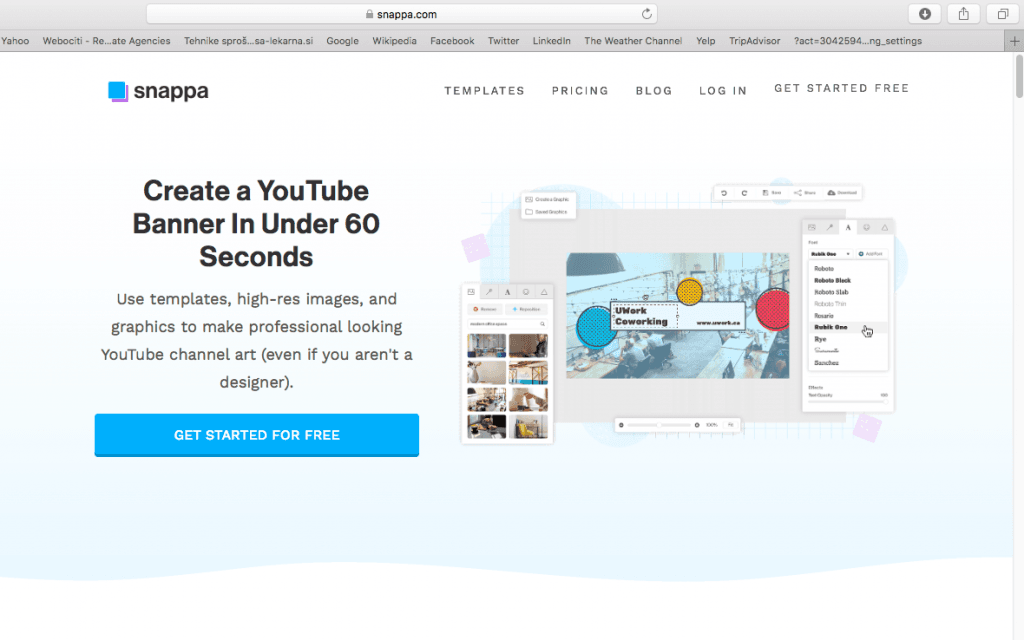
You can design a banner at this page:
https://snappa.com/create/youtube-channel-art
When designing the banner and inserting it on your video, make sure that all important information, such as your website URL, slogans, and images, are within that space so they will be displayed on each individual device (computer, phone, TV) and won’t be cut off or obscured.
Step 4: Creating Content
Your first video probably won’t be what you want it to be. That’s okay too – practice will improve your recordings. The more content you create, the faster and easier it will become, and the quality will improve. What matters is that you practice creating and uploading videos until you become well acquainted with how the platform works.
For guidance, watch a lot of videos from a niche that is the same or similar to yours and see what the owners of those channels offer. Pay attention to their format and overall structure, and take notes. Then create a schedule for when you will publish content and stick to it.
The main thing to pay attention to during the editing process is to remove all unnecessary pauses, delays, and ensure a consistent pace, so that your content flows smoothly and maintains your viewers’ attention.
You can also save a lot of money by learning to edit your own videos. Popular vloggers use Adobe Premiere to edit their videos.
YouTube is not a difficult platform to learn. In fact, its popularity is largely due to how easy it is to use. You can upload videos in various formats and YouTube converts them to Adobe Flash for you. This allows YouTube to play your videos in its flash player (which anyone can download and use for free).
Of course, most people will likely find your video by searching for relevant content on Google or YouTube. To help viewers connect with the videos they are looking for, YouTube uses a complex algorithm consisting of more than a million lines of code.
YouTube also measures video quality by measuring watch time. If many viewers leave the channel before your video ends, it means your video was poor or didn’t give viewers what they were looking for. If they stay until the end, your video is likely relevant to the search terms used and will rank higher than videos that were not watched to completion.
It is important to stay consistent, follow the content schedule you have set and that your subscribers can rely on. This also keeps you true to your brand.
Step 5: Build Your Subscriber Base
When it comes to growing your audience, there are a few simple things you can do to give your channel the best chance of success. First, consistently work on building a strong back catalog. This means the more video content you publish, the better.
By providing subscribers with a large amount of content they can use or that is useful to them, you will keep them on your channel longer and thus make it easier to convert a visitor into a loyal subscriber.
So, work on building a content library. This is why creating a content schedule is so important. Decide whether you plan to create one video per week, every other week, or once a month – the choice is yours. However, keep in mind that when you are in the early stages of building your channel, you will need to invest more time and energy into creating more content. Therefore, consider creating content for your channel for a few weeks (perhaps even months) before publishing it. This way you can ensure enough material in advance so that people can follow your videos nicely.
Tip: subscribers prefer channels that regularly offer fresh, new content. You can set yourself up for long-term success without overwhelming yourself by creating content in series and then saving it for future weeks or months. This way you can take a break in between while still having fresh content to upload.
Also include a direct call to action in your videos. Don’t be afraid to ask viewers to subscribe or like your channel and to turn on notifications for your channel. Not everyone will understand how YouTube works, so remind them that they need to subscribe to be notified when new content is available. Additionally, people enjoy supporting new channels, so directly asking people to subscribe, comment, and like your video helps your channel grow. You can also end a video with a question or a request for feedback. This will encourage people to leave comments, which will signal to YouTube that your channel is growing and should be shown more frequently. The more activity a channel has, the more often it will appear in search results.
It would also be a good idea to find ways to network and cross-promote with other channel owners. Tag other channels and consider providing links in your video content to other channels. This will get you on the radar of established channels that may be open to networking. Likewise, look for opportunities to guest on relevant channels.
This can be done in several different ways, including collaborating on just one video, two separate videos that are combined (where you create one part of the video and someone else creates the other part), or by creating content exclusively for another channel as a way to introduce your brand to their audience while also offering the creator fresh content to publish.
When it comes to connecting with other channel creators while looking for possible collaborations, you can simply reach out to them through their social media accounts, via email, or directly through their video comments or blog. Before doing so, spend some time with their content, follow their channel, and explore what they do. That way, when you reach out to them, you can show that you are familiar with their content and brand, and explain why you believe the collaboration would be mutually beneficial.
Conclusion
Building a successful YouTube channel is not rocket science, but it does require time, dedication, and focus. In the first few months, you will likely create more content than later, in order to build up a backlog and quickly gain followers. Later on, you will be able to create fewer videos with a longer lifespan.
So create a content schedule that you feel you can stick to. Let your subscribers know they can expect content at a specific time each month, as this will keep them coming back.
Remember that watch time on YouTube is very important. The longer new viewers engage with your content, the more likely they are to convert into subscribers, and when it comes to retaining viewers, by analyzing the data that YouTube provides you, you will know with certainty which content is among your top-performing videos so you can create more of it. Furthermore, the longer a viewer stays engaged with your videos, the greater the chances they will interact with them — by subscribing, commenting, and liking your content.
Focus on optimization as part of your weekly business plan. You want to make sure that every title includes relevant keywords to maximize visibility. Remember to add keywords to your video descriptions as well.
And finally, always look for ways to build (external) links outside of the website. One of the simplest ways to do this is to automatically sync your YouTube channel with other social media accounts, such as Twitter, Instagram, and Facebook. This way, every time you publish new content, it automatically appears on all your social media profiles. This is important when it comes to maximizing exposure and successfully growing your channel.
If you would like to read even more about earning on YouTube, download the free e-book 11 Strategies of the Biggest YouTube Earners at the link below: