
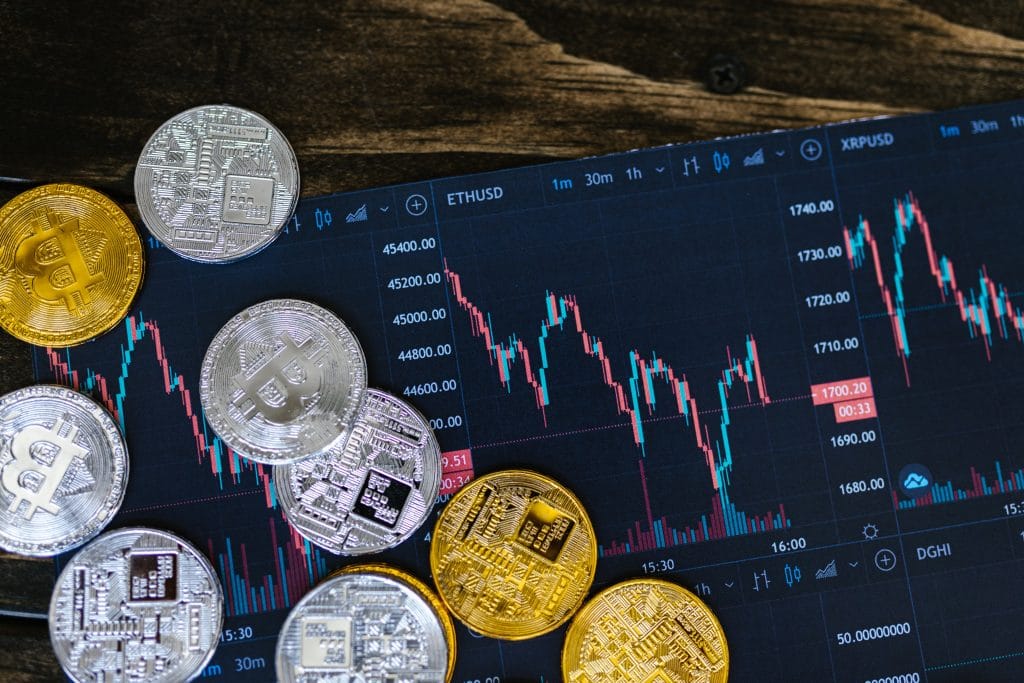
Cryptocurrencies are digital or virtual currencies that are protected by cryptography, making them nearly impossible to counterfeit or double-spend. Cryptocurrencies are decentralized networks based on blockchain technology. The main characteristic of cryptocurrencies is that they are generally not issued by any central authority, making them theoretically immune to government interference and manipulation.
Key characteristics of cryptocurrencies to keep in mind:
- Cryptocurrency is a form of digital asset based on a network that is distributed across a large number of computers. This decentralized structure allows them to exist outside the control of governments and central authorities.
- Experts believe that blockchain and its related technology will disrupt many industries, including finance and law.
- The advantages of cryptocurrencies include cheaper and faster money transfers and decentralized systems that do not collapse at a single point of failure.
- The disadvantages of cryptocurrencies include price volatility, high energy consumption in the case of mining activities, and widespread use in criminal activities.
To acquire cryptocurrencies, we can either mine them or buy them on crypto exchanges. However, we cannot use cryptocurrencies for payment on all websites. In fact, cryptocurrencies, even popular ones (such as Bitcoin, Ethereum…), are almost never used for retail transactions. However, in the last two years, due to the high growth in the value of cryptocurrencies, the entire process has become popular as a trading instrument.
The central point of functionality and appeal of all cryptocurrencies is blockchain technology. As the name suggests, a blockchain is essentially a series of connected blocks. Each block contains a set of transactions that have been independently verified by every member of the network. Each newly created block must be verified, making it nearly impossible to falsify the transaction history. Experts say that blockchain technology as a whole can serve multiple industries, but that it is still too early to draw conclusions. Financial institutions in the United States are testing the use of blockchain technology to reduce transaction costs by streamlining payment processing.
Types of cryptocurrencies
Bitcoin (BTC) is the most popular and most valuable cryptocurrency. Satoshi Nakamoto, an anonymous individual, invented and introduced the first cryptocurrency to the world in 2008. To date, there are more than 18,000 different cryptocurrencies on the entire crypto market.
Bitcoin, which became available to the public in 2009, remains the most traded cryptocurrency. In November 2021, more than 18.8 million bitcoins were in circulation with a total market capitalization of approximately $1.2 billion.
Each cryptocurrency has a different function and specification. For example, Ethereum (ETH) enables the seamless operation of smart contracts and applications built on its blockchain, without fraud, downtime, oversight, or any third-party interference. Ripple (XRP) is used by banks to facilitate transfers between different regions.
Following the enormous success of Bitcoin, numerous other cryptocurrencies were created, known as ”ShitCoins”. Some of these have actual functions that are important for technology and its development, but unfortunately the vast majority exist for the purpose of making quick profits, where crypto ”whales” (people who own enormous amounts of cryptocurrencies and can manipulate the crypto market on their own) can use various tactics to manipulate the crypto market and acquire enormous sums of money.
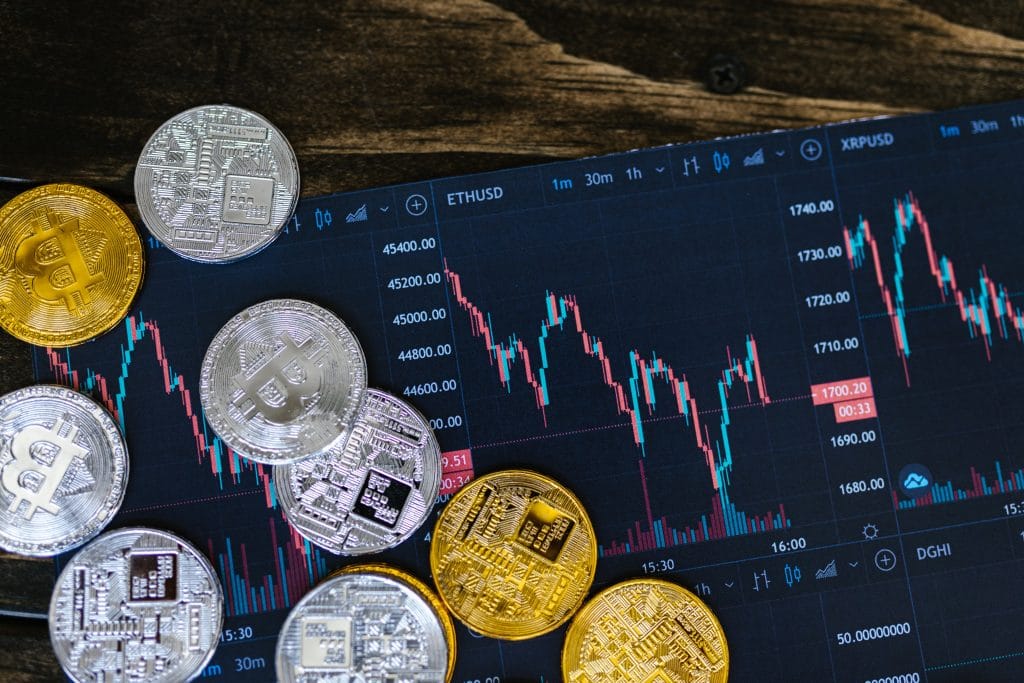
Choosing a crypto exchange
There are three important factors that people who want to trade cryptocurrencies should consider in order to choose the most optimal crypto exchange.
Fee schedule
The most popular fee schedule used by the majority of cryptocurrency exchanges is the multi-tiered ”maker” and ”taker” scheme. It uses trading volume to create tiers and charge fees for ”makers” and ”takers” based on your total trading volume.
A ”maker” is a person who creates a market on the exchange by selling cryptocurrencies, while a ”taker” is a person who removes cryptocurrency from the market by buying it. Each individual must pay transaction fees, however ”makers” typically pay less.
Fee schedules on cryptocurrency exchanges are designed to frequently encourage trading with larger transaction amounts worth hundreds of thousands of US dollars. Fees often decrease as an individual’s 30-day cumulative trading volume increases.
As an example, trading on the Coinbase crypto exchange, with a trading volume of less than 10,000 US dollars, requires maker and taker fees of 0.50%, while a trading volume of more than 10,000 US dollars decreases in tiers based on your total trading volume.
You also pay lower fees at higher levels as a maker, since they increase the liquidity of the crypto market, which in turn allows crypto exchanges to continue trading.
Some crypto exchanges still charge fees for individual transactions, but have mostly transitioned to a combined fee schedule very similar to what is probably the best-known one used by Coinbase. Small and infrequent cryptocurrency trading is not cost-effective on exchanges, unless you want to buy a specific cryptocurrency and hold it in your crypto wallet for a longer period of time. In that case, most exchanges only charge a fee for purchasing a specific cryptocurrency, which varies considerably between individual crypto exchanges.
Location
Trading in cryptocurrencies is still prohibited in many countries. However, state authorities and government bodies are getting involved, with the desire to adopt a regulatory approach to cryptocurrencies in some of the potentially largest trading markets.
Exchanges offering cryptocurrency trading in the US must register with the Financial Crimes Enforcement Network, which means that exchanges based in the United States are regulated and may not offer the same services as exchanges headquartered outside the US.
Availability
Most globally recognized cryptocurrency exchanges do not offer access to all coins that can be found online. There are exchanges that may only offer trading in stablecoins, which include: Tether (USDT), USD Coin (USDC), Binance USD (BUSD), Dai (DAI)…, and exchanges that may only offer trading in altcoins. To access all the cryptocurrencies you are interested in, you will most likely need to use different exchanges.
The three highest-rated crypto exchanges
Here is a brief comparison of trading fees for cryptocurrencies on the three highest-rated and most popular crypto exchanges. The CoinMarketCap spot exchange score is used to measure the popularity of crypto exchanges. This score takes into account each exchange’s web traffic, trading volume, average liquidity, and trustworthiness and security.
Binance
Binance, founded in 2017, needed only a few years to reach the top of the list of cryptocurrency exchanges. In 2021, Binance was the highest-rated crypto exchange in the world.
Cryptocurrency enthusiasts can choose from hundreds of different cryptocurrencies on Binance, however US citizens, due to regulations, can only choose from just over 70 different cryptocurrencies on Binance.US. Internationally, Binance allows users to trade cryptocurrencies, buy cryptocurrencies, create NFTs, learn through Binance Academy, and much more.
On Binance, you will be charged fees based on how you use the exchange. With VIP ratings based on your trading volume, you will have 0.1% fees for spot trading. Binance users with a trading volume below 50,000 US dollars are charged 0.1% maker/taker fees, but these decrease further in tiers from there. For simply buying or selling cryptocurrencies, you will have a 0.5% fee.
If you use or simply hold the BNB (Binance Coin) cryptocurrency in your Binance wallet, you can receive up to a 25% discount on applicable fees. This of course depends on how much BNB you hold in your wallet.
Coinbase
The Coinbase crypto exchange was founded in 2012, with the goal of providing all users with easy access to cryptocurrencies. To date, you can trade more than 150 different cryptocurrencies on it. Coinbase became publicly tradable following its initial public offering and listing on the Nasdaq (National Association of Securities Dealers Automated Quotations) in April 2021. It reached its highest price on November 9, 2021, at 357.39 US dollars.
The fees for using Coinbase services depend on the size of your transactions, the payment method, and market conditions. This includes maker and taker fees.
The highest fee on Coinbase for spot trading is 0.60%, but it is highly dependent on how much money or cryptocurrencies you are trading.
FTX
FTX is a crypto exchange available only at the international level, unless you are using exchange services in the United States of America. This US crypto exchange has more than 30 different cryptocurrencies available, while the international exchange has access to more than 300 different cryptocurrencies.
FTX uses a multi-tier fee structure that can reward you for trading more. The higher your trading volume, the less you will pay in fees. You will be charged based on whether you are a ‘maker’ or a ‘taker’. However, it is similar to Binance. The FTX crypto exchange has its own crypto token that helps you pay lower fees. The more FTT (FTX Token) you hold, the lower the fees you have to pay for trading.
The only fixed costs at FTX are bank transaction fees for cash withdrawals, where you can withdraw up to $5,000 without a fee every week. However, if you exceed $5,000 and do not have at least 25 FTT in your wallet, you will have to pay a $25 fee. If you simply want to deposit money into your FTX account, you will not have to pay anything.
Tips for further reducing fees
The impact of fees on cryptocurrency investors’ crypto wallets can vary greatly. Between April and June 2012, for example, the average transaction fee for trading Bitcoin ranged from $4.38 to $62.77.
Use exchanges for fee-free trading
Robinhood is a trading app that has helped make fee-free trading much easier. Brokerage firms in the US have recently enabled cryptocurrency trading without fees.
At Phemex, Premium and Premium Trial investors can trade without fees. Larger crypto exchanges such as Coinbase and Binance have precisely defined trading fees, however there are ways, described above, through which users of these services can significantly reduce their fees.

Buy cryptocurrencies with coins
When you convert your cryptocurrencies into FIAT – currencies supported by governments, you will face fees on most crypto exchanges for this conversion and the associated deposit of FIAT into your digital wallet. On the other hand, there are a huge number of exchanges that do not charge any fees for this, so consider using this strategy carefully to further reduce the costs of paying fees.
Pay attention to transaction amounts The vast majority of crypto exchanges charge a percentage of the traded amount, usually around 1%, which means that if you want to trade $10,000, you will have to pay $1,000 in fees. In some cases, a known fixed fee applies that does not depend on the amount you are trading, but in general, the larger your transaction, the higher the fee you will have to pay. That is why it is advisable to trade on exchanges that are secure and have fixed trading fees.
Conclusion
The future of cryptocurrency trading is currently well positioned in emerging technologies that could greatly benefit the world in the future. It goes without saying that people who have already become well acquainted with the crypto world can assess for themselves whether cryptocurrencies can benefit or harm them, in accordance with their goals for the future. However, we must be aware that fees will always be present. After all, this is the main source of income for crypto exchanges. But if we follow these tips, we can all save some money together.
Don’t miss out!
If you are interested in learning more about cryptocurrencies themselves, we invite you to read other articles on our website, which can be found in the Cryptocurrencies section. You are also welcome to join us at a free webinar where we will talk about how to earn with cryptocurrencies. You can register at this link: https://zannekrep.com/brezplacno20/