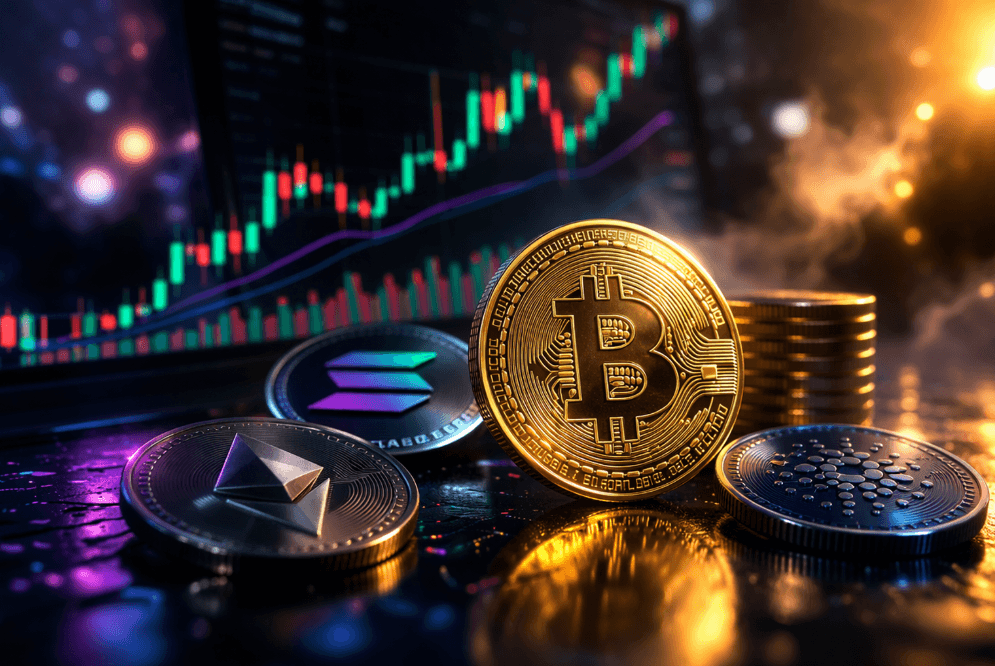
If you’re here today, you’re probably thinking about how to get started with cryptocurrencies and – more importantly – how to actually make money with them. I understand you. Most people start with the wrong question: “Which cryptocurrency will grow by 1000% tomorrow?” That’s not investing, that’s a lottery.
I look at it differently. Cryptocurrencies aren’t gambling, they’re financial technology. And if you understand how the exchange works, you can start generating serious income – even if you don’t know what Bitcoin is today.
In this article, I’ll explain everything: from how to open an account, to advanced strategies like staking, which only 5% of the most successful people use.
👉 If you want to understand how to actually make money with cryptocurrencies (and not just guess), sign up for my free webinar, where everything is explained step by step.
What is an exchange, really?
A cryptocurrency exchange is an online platform that acts as an intermediary between buyers and sellers of digital assets. If you wanted to buy shares in Krka, you’d go to the Ljubljana stock exchange through a stockbroker. In the world of crypto, you are the intermediary, and the exchange is your tool.
Types of exchanges: CEX vs. DEX
For a beginner, it’s essential to know the difference between centralized (CEX) and decentralized exchanges (DEX).
- Centralized exchanges (CEX): These are companies like Binance, Coinbase and Kraken. They operate similarly to banks. They are easy to use, have customer support, and allow purchases with euros.
- Decentralized exchanges (DEX): Examples include Uniswap or PancakeSwap. There is no company behind these; everything runs through smart contracts. For beginners, these exchanges are often too complex, but they are key for finding coins that haven’t yet reached the main markets.
Tip: As a beginner, stick to CEX exchanges. Safety and simplicity come first.
Detailed instructions for registration and security
Registration is the first step where most people make a fatal security mistake.
The KYC (Know Your Customer) process
When opening an account on a reputable exchange, they will ask you for an identity document. Many people get scared: “Why do they need my passport?” The answer is simple: regulation. If an exchange doesn’t require KYC, it’s probably not safe for your money.
Security protocol (Don’t skip this!)
Before you transfer your first euro, you need to set up 2FA (Two-Factor Authentication).
- Never use SMS codes. Hackers can clone your SIM card.
- Use Google Authenticator. This is an app that generates a unique code every 30 seconds. Without this code, no one can withdraw your money, even if they guess your password.
How to read charts and orders (Order Book)
When you first log in to an exchange, you’re greeted by a mountain of numbers and red-green charts.
Order Book
This is a list of all the people who want to buy or sell a coin.
- Ask (Red): Sellers.
- Bid (Green): Buyers.
Types of orders in practice
Market Order: You buy immediately at the best current price. This is for those who are in a hurry.
Limit Order: You set the price. You say: “I will only buy Bitcoin if it drops to €50,000.” The exchange will automatically execute the purchase when (and if) the price reaches that point. This is the foundation of every serious strategy.
5 Concrete Strategies for Earning
This is where amateurs are separated from professionals. I advise you not to try everything at once. Choose one and become a master at it.
1. The “HODL” Strategy (Long-Term Investing)
The name comes from a misspelling of the word “hold”. This is a strategy for those who don’t have time to stare at a computer every day.
- Psychology: You need to be prepared for 50% drops without panicking.
- DCA (Dollar Cost Averaging): Instead of investing €1,000 all at once, you invest €100 every month. This way you buy more when it’s cheap and less when it’s expensive. This is mathematically the safest path to profit.
2. Active Trading (Trading)
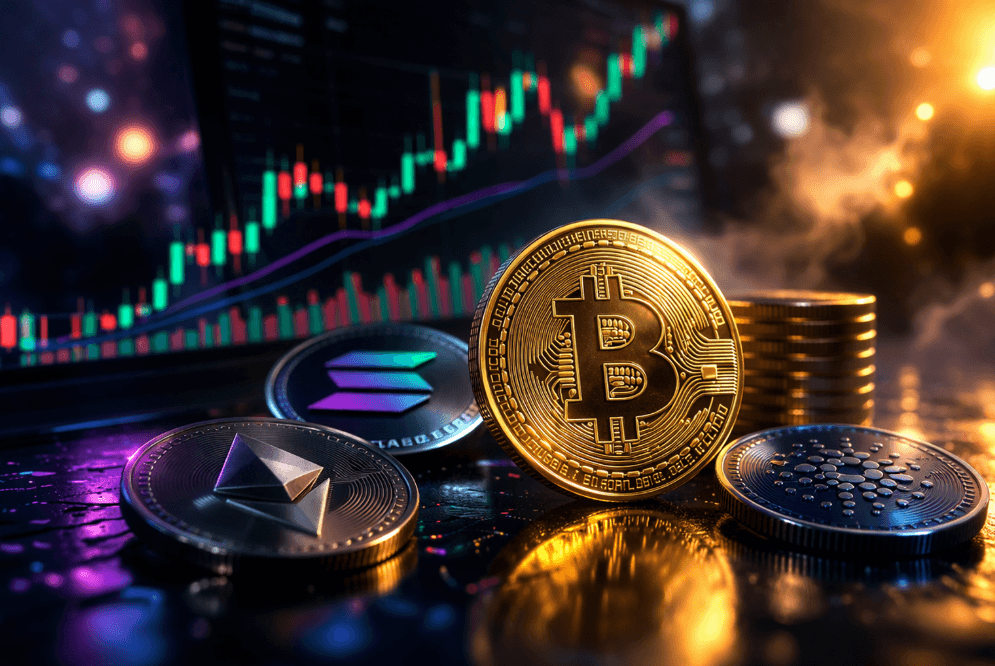
This is a full-time job. You use technical analysis, monitor RSI indicators and candlestick charts.
- Warning: 90% of traders lose money in their first year. If you don’t have a mentor or a system, avoid this.
3. Staking: Let Your Crypto Work for You
Staking is a digital form of savings with interest. Some cryptocurrencies (such as Ethereum or Solana) need your coins to validate transactions. In return, the exchange pays you “rent”.
- Returns: Typically between 4% and 12% annually. This is passive income in its purest form.
4. Airdrops: How to Get Free Tokens
New projects want to attract attention, so they distribute their tokens for free to those who use their test network.
5. Copy Trading: A Shortcut for Beginners
Some exchanges (e.g. Bybit) allow your account to automatically copy the moves of professional traders. If they earn 5%, you earn 5%. Of course, if they lose, you lose too. Choose traders with a long history of stable returns.
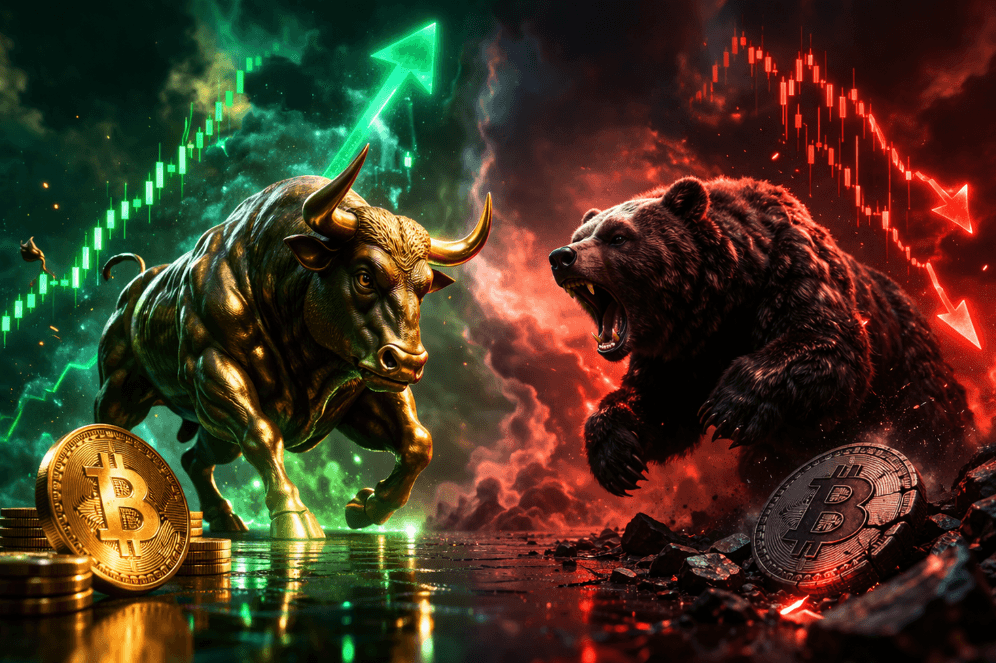
Advanced Market Psychology (Bull vs. Bear Market)
Why do most people buy at the top? Because they are driven by FOMO (Fear Of Missing Out) – the fear of missing an opportunity.
- Bull Market: Everyone is euphoric, neighbors are talking about crypto, prices are rising. That’s when you should be slowly selling.
- Bear Market: Prices drop 80%, the media writes that crypto is dead. That’s when you should be buying.
My golden rule: When your grandmother asks how to buy Bitcoin, it’s time to sell.
Most people lose money because they react to emotions – not to strategy. Don’t be one of them.
If you want to understand when to buy and when to sell (and not follow the crowd), sign up for my free webinar
Which Cryptocurrencies to Choose (Project Analysis)
Don’t buy “meme coins” unless you have money you’re prepared to lose completely.
Bitcoin (BTC): Digital gold. The foundation of every portfolio.
Ethereum (ETH): The world’s computer. The entire DeFi (decentralized finance) system is built on it.
Solana (SOL): Fast and cheap. Currently the most popular among small users.
Common Mistakes That Will Cost You Thousands of Euros
Sending to the wrong network: If you send USDT via the Ethereum network to a Solana address, the money will be gone forever. Always check the network (ERC-20, BEP-20, TRC-20)!
Storing passwords on your computer: Hackers look for files named “passwords.txt”. Write your passwords on paper and store them in a safe.
Believing in “guaranteed returns”: If someone promises you a fixed 1% return per day, it’s 100% a Ponzi scheme (scam).
Technical Guide to the Exchange (Click by Click)
When you first log into your chosen exchange (e.g. Binance or Bybit), you might feel like you’re in a Boeing cockpit. Let’s look at which buttons actually matter and what you shouldn’t touch.
Dashboard
This is your balance overview. Here you can see your “Net Worth” – the total value of all your cryptocurrencies, converted into euros or dollars.
- Spot Wallet: This is your main wallet. This is where the coins you’ve purchased and own are held.
- Funding Wallet: This is where money lands when you first deposit it by card or via SEPA transfer. To start trading, you often need to transfer money from the “Funding” to the “Spot” account (this is free and instant).
Trade Interface
When you click on a pair, e.g. BTC/EUR, you see a chart.
- Candlesticks: Each bar represents a specific time period (e.g. 1 hour or 1 day). Green means the price went up, red means it went down.
- Timeframes: If you’re a long-term investor, look at the 1-day (1D) or 1-week (1W) chart. Don’t waste your time with 1-minute charts, unless you want to go grey within a week.
Deposit & Withdraw
- Deposit: Here you get your unique address (a string of numbers and letters) to which you can send crypto from another exchange or wallet.
- Withdraw: When you want to send money to your bank or to your personal wallet. Always check the network! If you’re sending Bitcoin, use the Bitcoin network. If you’re sending Ethereum, use ERC-20.
Airdrops – A Strategy for Those with More Time than Money
Airdrops are the “free lunch” in the crypto world that actually exists. It’s a marketing strategy used by new projects. Instead of paying millions for ads, they distribute their tokens to early users.
How does it work in practice?
Imagine a new exchange that wants to compete with Binance. They say: “Everyone who completes at least one trade on our exchange in the next month will receive 100 of our tokens.”
You complete a trade for €10.
Three months later, the project launches its token on the market.
Your 100 tokens are suddenly worth €500.
- Tip: Create a separate wallet just for airdrops, so you don’t put your main savings at risk.
- Warning: Never give anyone your seed phrase (12 words). Legitimate airdrops will never ask for your private key.
Wallets – Where to Safely Store Crypto?
There’s an old saying in the crypto world: “Not your keys, not your coins”. If you hold crypto on an exchange, technically you don’t have control over it – the exchange does. If the exchange collapses (as happened with FTX), you’re left with nothing.
Hot Wallets
These are applications on your phone or in your browser (e.g. MetaMask or Phantom).
- Advantages: They are free, easy to use, and essential for airdrops and DeFi.
- Disadvantages: Because they are connected to the internet, they are vulnerable to viruses and hackers.
Cold Wallets (Cold Wallets / Hardware Wallets)
These are devices that look like USB sticks (e.g. Ledger or Trezor).
- Advantages: The highest possible security. Your private keys never leave the device. Even if your computer is full of viruses, a hacker cannot steal your money without physically pressing the button on your Ledger.
- Tip: If you have more than €1,000 in crypto, buying a Ledger (costs around €70–150) is your best investment.
Psychology and Risk Management
This is the chapter that will determine whether you’ll be wealthier in a year or whether you’ll give up on crypto.
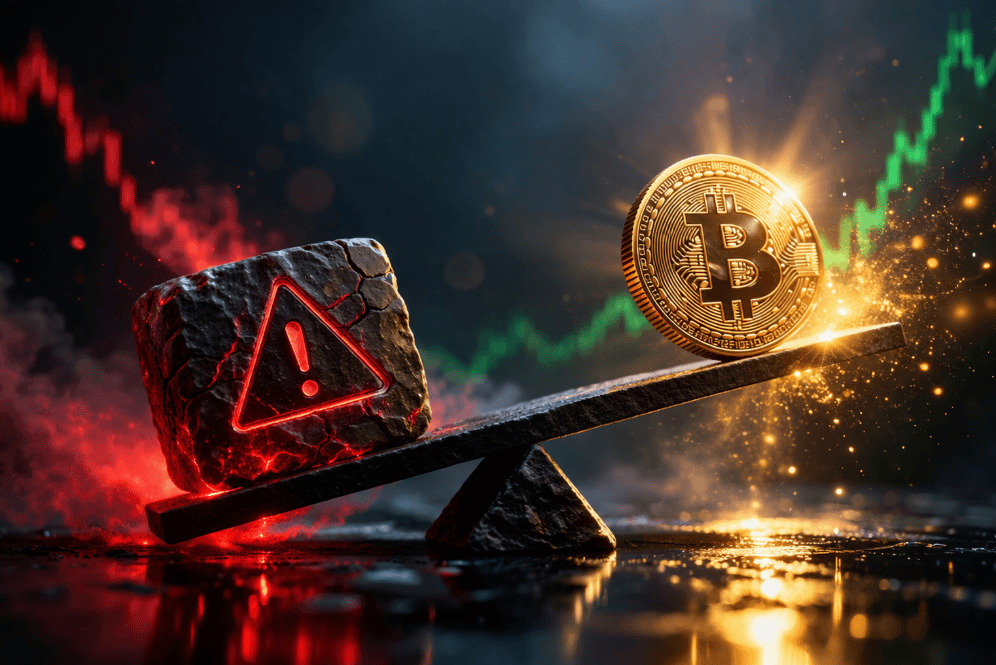
Risk/Reward Ratio
Never invest everything in one coin. Divide your portfolio:
- 70%: Safe foundations (Bitcoin, Ethereum) – Lower volatility, long-term growth.
- 20%: Medium risk (Solana, Chainlink, established protocols) – Greater potential, but bigger drops.
- 10%: Speculation (New tokens, meme coins) – This is where you go all or nothing.
How to handle a market crash?
When you see red numbers and -20% in a single day, your brain switches into “flee” mode. This is an evolutionary instinct. In crypto, you need to do the opposite. If you believe in the project and the technology hasn’t changed, the drop is simply a sale. If you bought Bitcoin at €60,000 and it’s now €50,000, you’ve been given the opportunity to buy it cheaper. This is the foundation of the DCA strategy we discussed earlier.
Most people lose the most money precisely during crashes – because they sell in panic. Those who understand the market, however, grow wealthier during those times.
If you want to master a strategy like DCA and understand how to react during crashes without stress, click here
The Future of Cryptocurrencies – What to Expect?
Cryptocurrencies are no longer just digital money. They are becoming the backbone of the internet of the future (Web3).
- Tokenization of real-world assets (RWA): Soon you’ll be able to buy 1/1000 of a property in New York through an exchange in the form of a token.
- Institutional money: Pension funds and major banks are already investing in Bitcoin. When “old money” gets involved, liquidity and stability increase.
Conclusion: Your Next Step
It doesn’t matter whether you start with €100 or €10,000. What matters is that you start with knowledge, not guesswork.
The world is changing. Banks are becoming less important, while digital ownership is becoming increasingly significant. If you’ve read this article to the end, you’re already ahead of 99% of the population.
What now?
Choose an exchange and complete KYC.
Set up 2FA security.
Transfer a small amount (e.g. €50) as a test.
Make your first purchase.
If you want to see me open an exchange and select coins live, I invite you to my free webinar. There I show you what I can’t write in a single article.👉 Sign up here
Don’t wait for the perfect moment. The perfect moment was 10 years ago. The second best moment is today.