
As Bitcoin has become a multi-trillion dollar asset class and its value continues to grow in 2022, more and more people are interested in learning about cryptocurrency mining.
However, cryptocurrency mining can be an expensive process, both in terms of costly computer hardware and software, as well as the energy required to maintain that mining equipment. In this article, we will explore whether crypto mining is worth learning in 2022 and what the alternatives might be.
Definition
Crypto mining is the process by which networks of specialized computers generate and release new coins and verify new transactions.
Crypto mining is the process that cryptocurrencies use to generate new coins and verify new transactions. It involves vast, decentralized networks of computers around the world that verify and secure blockchains – virtual ledgers that document cryptocurrency transactions. In return for contributing their processing power, computers in the network are rewarded with new coins. This is called a virtuous circle: crypto miners maintain and secure the blockchain, the blockchain awards coins, and the coins provide an incentive for crypto miners to maintain the blockchain.
How does mining work?
There are three main ways to obtain coins. You can buy them on an exchange such as Coinbase, receive them as payment for goods or services, or virtually “mine” them. It is this third category that we will explain in this article, using Bitcoin as an example.
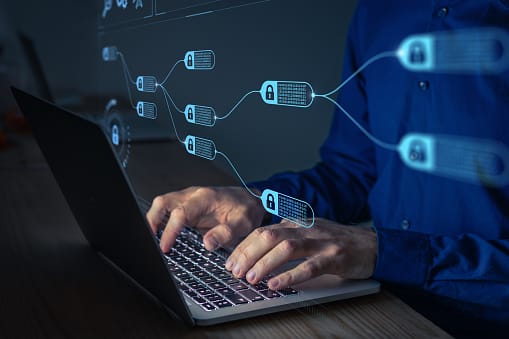
You may have thought about trying to mine Bitcoin yourself. A decade ago, anyone with a decent home computer could participate. But as the blockchain grew, so did the computing power required to maintain it. (For comparison: in October 2019, mining one Bitcoin required 12 times more trillions of computing power than was needed for the first blocks in January 2009.) As a result, hobbyist Bitcoin mining these days is unlikely to be profitable. Almost all mining is now carried out by specialized companies or groups of people who pool their resources. Nevertheless, it is good to understand how it works.
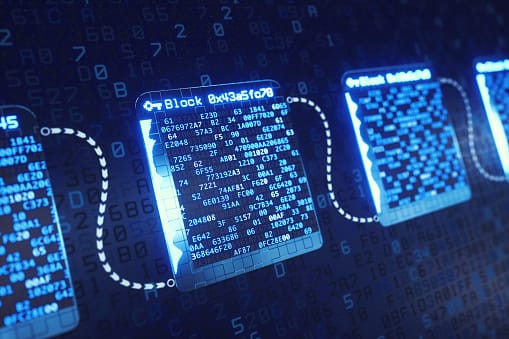
Specialized computers perform the calculations needed to verify and record every new Bitcoin transaction, ensuring that the blockchain remains secure. Verifying the blockchain requires enormous computing power, which is voluntarily contributed by miners.
Bitcoin mining is similar to running a large data center. Companies purchase mining hardware and pay for the electricity needed to run it (and keep it cool). For this to be profitable, the value of the coins earned must be higher than the cost of mining those coins.
What motivates crypto miners? The network operates like a kind of lottery. Every computer in the network competes to be the first to guess a 64-digit hexadecimal number known as a “hash.” The faster a computer can produce guesses, the greater the probability that the miner will earn a reward.
The winner updates the blockchain ledger with all the newly verified transactions – adding a newly verified block containing all the transactions to the chain – and receives a predetermined amount of newly minted Bitcoin. On average, this happens every ten minutes. At the end of 2020, the reward was 6.25 Bitcoin – however, it will be halved in 2024 and every four years thereafter. In fact, as the difficulty of mining increases, the reward will continue to decrease until there are no more Bitcoins left to mine.
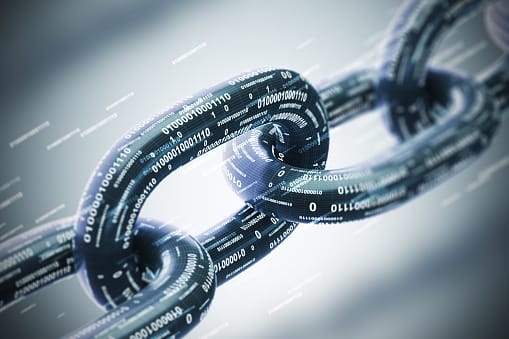
There will only ever be 21 million Bitcoins. The last block is theoretically expected to be mined in 2140. From that point on, miners will no longer rely on newly issued Bitcoins as a reward, but rather on the fees they charge for processing transactions.
The Bitcoin Mining Process
Every Bitcoin transaction is recorded in a massive public ledger called the blockchain. When a new Bitcoin transaction is made, it is sent to miners (also Bitcoin users) for verification.
This verification includes a mathematical proof of work, created by attempting billions of calculations per second. When a complex mathematical problem is solved, the transaction is confirmed and added to the blockchain, and the miner(s) who solved it are rewarded with new Bitcoin.
As more Bitcoin is mined and the supply of new coins decreases, the amount of Bitcoin released with each new block gradually diminishes over time. This is known as Bitcoin halving. Generally, the value of Bitcoin rises following periodic halvings.
Although Bitcoin mining may seem profitable, it requires specialized machines built and configured specifically for cryptocurrency mining to operate effectively. Space is also needed to house and cool these large machines, which consume energy and operate 24 hours a day.
The mining market is dominated by large companies that provide vast warehouses to house their ASIC mining devices. Some of these companies run mining pools, which smaller miners can contribute to in exchange for a share of block rewards for a small fee.
Bitcoin Mining Pools
Due to the high costs and increasing difficulty of Bitcoin mining, most miners today use what is known as a “mining pool.” Participating in mining pools is considered by many to be the only way for smaller miners to earn any profit today, and even then it is difficult to recoup the costs of equipment and electricity.
With a mining pool, individual miners combine their resources with other miners, improving their chances of mining a block and earning Bitcoin rewards. When a block is mined, the rewards are distributed among the various miners proportionally to the amount of computing power (known as “hash power”) they contributed.
Mining pool owners typically charge a fee for maintaining the pool. There are several different pools to choose from, each with its own fee structure.
Factors to Consider When Choosing a Mining Pool
After securing Bitcoin mining equipment and the electricity needed for mining, a small miner will need to find a suitable mining pool. There are several important factors to consider:
- fees: most, but not all, Bitcoin mining pools charge fees. Fees are taken from the reward payout and typically range from 0% to 4%;
- pool size: the larger the pool, the more frequent the payments, as greater hash power means more blocks found. This also means that payouts are smaller, as the reward is shared among more people. On the other hand, smaller pools pay out less frequently but in larger amounts;
- security and reliability: miners may want to find a mining pool they can trust not to steal user funds or be hacked. Joining established pools with a long track record can help reduce these risks.
Why Is Mining Important?
Beyond releasing new coins into circulation, mining is central to the security of Bitcoin (and many other cryptocurrencies). It verifies and secures the blockchain, which allows cryptocurrencies to function as a decentralized network without the need for third-party oversight. And it creates an incentive for miners to contribute their computing power to the network.

How long does it take to mine one Bitcoin in 2022?
The time required to mine one whole Bitcoin varies and largely depends on the amount of hash power contributed by the miner. Generally speaking, the greater the hash power, the faster a block will be solved, resulting in the miner receiving a block reward in the form of newly minted Bitcoin.
Mining difficulty is another important variable. The lower the difficulty, the greater the chances of finding a new block.
When prices rise, this provides more motivation to acquire coins. After Bitcoin’s hash rate increases due to more miners coming online, the difficulty adjustment (which occurs every two weeks) tends to move upward.
When prices fall, the opposite tends to occur, as the costs of Bitcoin mining equipment and electricity increase relative to the value of the coins being mined. When hash power goes offline, the difficulty adjusts downward.
How Can You Mine Bitcoin Yourself?
When Bitcoin was first created, the computing power required to mine Bitcoin was sufficient for the central processing unit (CPU) of an average laptop.
Over time, the calculations have become more complex. Today, mining can mostly only be achieved with advanced application-specific integrated circuit (ASIC) machines that were created specifically for Bitcoin mining.
Nevertheless, the hardware requirements for Bitcoin mining are constantly evolving as older machines become obsolete. An ASIC that was powerful enough to be profitable six months ago may not be able to produce enough coins to cover the cost of the electricity required to run that same ASIC today. When this happens, miners must acquire new, more advanced hardware.
If you plan to try Bitcoin mining yourself, there are a few things to consider when purchasing equipment:
- equipment costs;
- electricity costs;
- time required to recoup equipment costs;
- the impact of Bitcoin price fluctuations on profitability;
- how frequently you will need to purchase new, more powerful machines and sell the old ones.
How many Bitcoins will be “mined” in 2022?
Currently, approximately 900 new Bitcoins are mined each day. If this were to continue throughout 2022, approximately 328,500 Bitcoins could be mined this year.
An interesting thing worth noting is that more people mining Bitcoin does not lead to an increase in the number of coins being mined. The block reward is currently set at 6.25 Bitcoin (this will remain until the next Bitcoin halving), and one block is mined approximately every 10 minutes. Increased competition for blocks leads to a higher difficulty rate, but the number of new coins remains the same.
Four steps to mining using Bitcoin as an example
- Purchase Bitcoin mining hardware.
To mine Bitcoin, you need special hardware. It is called a mining device. Ordinary home computers were able to mine Bitcoin in the early days of the currency. Due to Bitcoin’s popularity, the complexity of the algorithm had to increase, creating the need for greater computing power. It consists of a specialized chip called an ASIC. Most miners use ASIC chips.
Bitcoin’s consensus algorithm is solved with the help of these powerful machines.
- Install the mining software of your choice.
You now need to download the software required to connect your mining device to the Bitcoin blockchain once you have set up your Bitcoin mining device. The software adds new blocks to the blockchain, and Bitcoin mining can be done there with several free programs.
- Join an online Bitcoin mining pool.
Despite having the latest hardware and software, an individual would not be able to mine Bitcoins. Large mining “farms” backed by major mining companies are not competitive for small miners. A Bitcoin mining pool offers a solution. A group can use the combined computing power of individual miners to compete collectively. The pool operator charges fees and rewards that are slightly lower than with solo mining. However, by using a pool, you can ensure frequent rewards.
- Mining
Now that you have chosen a pool, you can start mining Bitcoins. Turn on your mining equipment, plug it into an electrical outlet, browse the Bitcoin blockchain with your chosen software, enter your Bitcoin wallet details, and select a mining pool. And you are ready to go.
How much does a Bitcoin miner earn on average?
While individual Bitcoin miners struggle to generate a profit, for individuals who join Bitcoin mining pools there is a much greater likelihood of earning. However, the amount of money a Bitcoin miner can generate depends on several factors.

The profitability of Bitcoin mining must be sufficient to cover electricity costs and the initial investment in mining equipment in order to generate a profit. Bitcoin miners focus on low-cost energy, low-cost technology, and a solid Bitcoin mining pool to give themselves the best chance of success.
Another factor to consider is the tax on mined Bitcoins. It is unlikely that a miner will generate a profit, but you may still have to pay taxes, depending on the jurisdiction.
Additionally, the profitability of Bitcoin mining operations is governed by cryptocurrency prices. Bitcoin must maintain a high price in order to offset the costs of mining equipment and electricity paid in fiat currency.
Alternatives to Bitcoin Mining
For those who choose to take on the cumbersome task of cryptocurrency mining, the best cryptocurrency to mine may be the one with the least difficulty and the highest price.
Of course, this dynamic is constantly changing, so the best cryptocurrency to mine today may not be the best to mine tomorrow.
Historically, the only time altcoin miners generated significant profits was when they mined lesser-known, cheaper coins in the weeks and months before a major price surge, or the so-called “alt season”. This has happened twice so far – first in 2017 and again in late 2020/early 2021.
Smaller altcoins are typically accompanied by less difficulty, making it easier to mine larger quantities in a short period of time.
Significant investments in altcoin mining can be compared to buying a lottery ticket. The chances of success are small, but the payout could be substantial for a few lucky individuals.
Is it Worth Mining Ethereum in 2022?
One could argue that mining Ethereum (ETH), the token that powers the Ethereum network, is worth it in 2022, as this may be the last year anyone can do so.
What is Ethereum and How Does it Work?
Ethereum developers are working on a network upgrade called “Ethereum 2.0”. This upgrade will change the consensus mechanism for Ethereum from proof-of-work to proof-of-stake. The first phase of the upgrade began in December 2020, with the final phases planned for periods in 2021 and 2022.
Although it is still possible to mine ETH while the network uses proof-of-work, this will no longer be possible with proof-of-stake. Instead, only those who hold large amounts of ETH will be able to stake their tokens and become “validators”. Validators will have the opportunity to earn the next block rewards, with the highest odds going to those who hold the largest amounts of ETH.
Sign up for the free seminar now and here, to master the crypto field and earn real wealth!