

Custom audiences are those groups of people, or target audiences, that you want to specifically support by displaying your Facebook ads. Why is this the case and how can retargeting help you with successful Facebook advertising? Find out in this article.
Experience has shown that typically 20% of the money invested in retargeting on Facebook generates as much as 80% of total sales and revenue. The main reason is that this target audience is always warmed up, highly targeted, and knows you well. The key to reaching such customers is a great content experience along their journey with you and skillful retargeting.
What is the difference between targeting and retargeting?
With regular Facebook ads, targeting means setting criteria for the Facebook algorithm to determine who your ad will be shown to, based on where people live, how old they are, their gender, their interests, and more. Retargeting, on the other hand, means creating an ad for a custom audience that is already warmed up — meaning they have shown interest in your content, taken specific actions in relation to your ads, Facebook page, or website. Retargeting revolves around building a highly engaged target audience. It therefore makes sense to invest some advertising budget into this already warmed-up audience, as they may just need a little more encouragement before deciding to make a purchase.
Use retargeting in Facebook ads and build trust with potential customers

When you start advertising on Facebook for the first time, you typically advertise to a so-called cold audience. These are people who don’t know you yet and are seeing your ad for the first time. Usually, they need to see your ad at least a few times before they decide to take any action. Retargeting is therefore a great tool, because you are advertising to those who have already made some form of contact with you. You define the criteria for what counts as contact. The first requirement for tracking, of course, is that you have a Facebook pixel set up. This allows your website to be connected to your Facebook Ad account, so it can track who visited your site and you can subsequently retarget them.
After a certain period of time, as a broader or cold audience sees your ads, free content, or emails, they gradually get to know you better and consequently begin to trust you more. Retargeting therefore works on the principle of establishing and maintaining a connection and trust between you and your narrower audience. Ultimately, it is always the case that most customers want to get to know you well before deciding to make a purchase. Once they like you, they begin to trust you over time. The more often they see your ads, the sooner they will accept you as an authority in your field.
When to use retargeting for Facebook advertising?
Typically, you create a Facebook ad based on a lookalike audience. This means that with the help of the Facebook algorithm, your ads are shown to those who, based on past behavior, Facebook determines would be interested in your ad. Even so, this is still a fairly cold audience. That’s why in this ad you might offer, for example, a free webinar, a free guide, a discount code, and so on. Those who view your offer gain some information, but an immediate sale happens rather rarely. That’s perfectly fine, because in the process you gain a wealth of valuable signals that the Facebook algorithm uses to filter this broad audience.
This is where retargeting comes into play — you want to reconnect with those who were interested enough in your content to, for example, watch your webinar or download a free PDF guide. Think about what would suit this audience and what else they need in order to finally decide to make a purchase. They’re not quite convinced yet — they just need a little something more to bring them across the finish line.
Keep in mind that the target audience already goes through a certain filter that identifies them as potential buyers — your content and offer is interesting to them, and it is only a matter of time before they decide to make a purchase from you.
What are Lead Generation ads and how do they improve Facebook advertising?
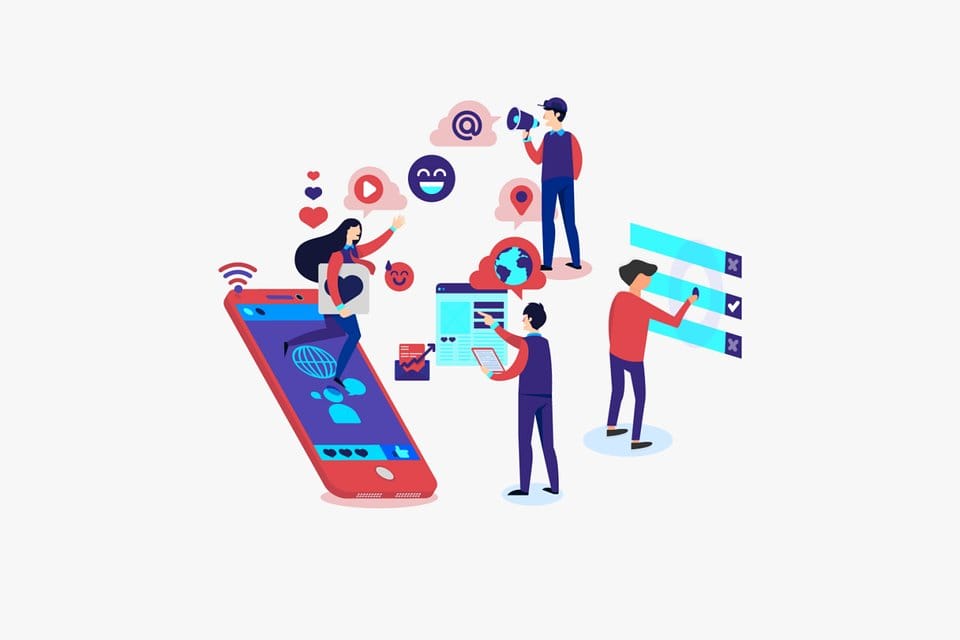
Lead Generation ads are shown to your target audience, often in pop-up form. They contain a very simple contact form that the customer fills in with their details, and in return receives one of your free pieces of content. Typically, the person enters their name and email, and in return can receive, for example, a free guide, a free webinar, a discount, or anything else relevant that you offer. You gain a new email address, which you carefully use for marketing purposes — bringing you one step closer to a successful sale.
You can even specifically retarget those who opened the contact form but did not click submit in the last 3 months. This way, you try again with those who have already shown a hint of interest, reminding them of your offer and perhaps this time they will fill in their details.
Make sure the technical backend works flawlessly and that the ad automation is guaranteed. That is, once a new potential customer joins your email list, they must definitely receive what was promised (a link to the webinar, a PDF guide, a discount code, …).
When preparing content, always keep in mind that you are bringing value to your target audience. Deliver content that your future customers find interesting and that brings them new knowledge and guidance. If you take care to produce good, quality content, these people will appreciate you, remember you, and be more willing to buy from you because they know you. The goal is conversion, even if it happens only after a good while.
What are the advantages of Lead Generation ads for Facebook advertising?
In addition to quickly obtaining the contact details of a new potential customer through a simple form, the most valuable fact is also that you get to know your future customers well. Why ask them only for their name and email when you can also offer them the option to select, for example, the most appropriate answer to a question you have posed? Be creative and ask the potential customer what you want to know — in return, you get a meaningful answer that can guide your future direction.
Even those who do not know you at all and have responded to your offer for the first time are exceptionally valuable contacts. Nurture them and prepare a series of quality emails for them — this way they will get to know you better and also come to accept your way of thinking. Let your communication with them be thoughtful and, above all, offer them value. If you believe in your business and want to retain your contacts long-term, let your content be top-notch.
The cost per purchase decreases because your target audience is fairly narrow, already warmed up, and familiar with you. The return on investment, on the other hand, increases.
How do you create a Lead Generation ad?
The simplest way is to create a Facebook ad as usual, and in the Ad set select Audience – Custom audience – create new. At this point, instead of the usual targeting based on demographic characteristics and interests, you define other criteria. This means you are selecting and specifying exactly those people who have, for example:
- watched your video for more than, say, 10 seconds or 75% of the video
- liked your Facebook page
- commented on one of your posts
- clicked the call-to-action button (i.e. buy now, more information, etc.)
- saved one of your posts
- been active on your Facebook page in any way
- landed on your website
- left or abandoned an item in their shopping cart, …
When defining the source of your Custom Audience, select Facebook page and mark the desired criteria. Facebook automatically captures information that is less than 365 days old, so the data is always current and not outdated, meaning you won’t waste money on stale targeting. You also have the option to further shorten this data capture time period.
Do you want to also include in your retargeting campaign those customers who have previously visited your website? The first requirement for tracking is to activate your Facebook pixel. You can read how to set it up in this article.
You can use a Customer list, which is your contact list. You upload a file containing the contacts of your target audience that you have acquired.
An excellent and extremely useful option is to use your Instagram profile. Select the Instagram page option, then choose from those who, for example:
- have been active and engaged with your Instagram posts in any way over the past year
- visited your profile in the past year. This way, your ads will be shown to these selected people.
Another option is to retarget those people who have shown interest in a specific event or responded to your invitation.
A few final tips for effective Facebook advertising and using retargeting:
When naming your custom audience for retargeting, be as specific as possible so you can easily monitor and immediately know which target audience it refers to. You can define it as, for example, “those who visited your website at least once in the last 30 days” or “those who made a purchase.”
You can also add criteria (include) or exclude them from one another (exclude), for example, those who visited your website at least once in the last 30 days but did not make a purchase.
Keep your retargeting simple, especially if you are just starting out. Don’t let the many different options confuse you. If you don’t yet have at least 100 people actively following you, this type of activity is not yet worth it. It is recommended to first expand your ad reach to grow your target audience. You can also clearly view all your target audiences (Audiences) in Business Manager under Audiences.
With Facebook ads and retargeting, you can ensure a increase in the number of conversions in record time. Take advantage of this opportunity that Facebook offers you with all its collected data, as it is not without reason that it is called the Lead Generation Beast.
Don’t miss this invitation:
If you want to learn even more tips and concrete guidance for successful selling through Facebook, you can watch the free Facebook webinar that takes place every Monday. Sign up here – https://zannekrep.com/brezplacni-webinar4/