Have you ever wondered why some people in the world of cryptocurrencies build a fortune in just a few months that others won’t earn in an entire career. The difference isn’t luck. The difference is access to the right information, understanding the market, and using proven strategies. Cryptocurrencies are the greatest financial opportunity of our generation, if you approach them with the right strategy.
In this article, I will guide you through the entire process. You will learn how to buy cryptocurrency, where to store it safely, how the technology behind it works, and – most importantly – how to actually make money with it.
What are cryptocurrencies and why do they exist?
Before you even think about investing your first euro, you need to understand what you’re buying. Cryptocurrency is a digital or virtual form of money. Unlike the euro or dollar, which are controlled by central banks (this is called fiat currency), cryptocurrencies operate on a decentralized network.
Blockchain Technology: The Foundation of the Digital Revolution
Everything revolves around a technology called blockchain. Think of it as a digital ledger of transactions that is public and accessible to everyone in the world simultaneously. Every time someone sends cryptocurrency to another person, it is recorded in this ledger.
Why does this matter? Because this ledger is not held by one bank, but by thousands of computers around the world. This means the record cannot be forged, deleted, or altered retroactively. Blockchain brings trust to a world where intermediaries (banks) are no longer necessary. You become your own bank.
So that you enter this world prepared and with all the knowledge you need, I have prepared a free e-book for you, click here to download
Glossary of terms for beginners: Speak the language of the crypto world
The world of cryptocurrencies uses a specific language. So you don’t feel lost, I’ve prepared an explanation of the key terms:
Bitcoin (BTC): The first and largest cryptocurrency in the world. It is often called “digital gold”, because its supply is limited to exactly 21 million coins. There will never be more, which gives it long-term value.
Altcoins: These are all other cryptocurrencies that are not Bitcoin (e.g. Ethereum, Solana, Cardano).
Crypto Exchange: An online platform where you exchange your euros for cryptocurrencies. It works similarly to an online bank or stock exchange.
Wallet: A software program or physical device where you securely store your digital coins.
HODL: This is a slang term that means you buy cryptocurrency and hold it for a long time, regardless of whether the price is currently falling. It originates from a misspelling of the English word “hold”.
Bull Market: A period when prices in the market are steadily rising and there is great optimism.
Bear Market: A period when prices are falling (sometimes by 80% or more) and people are fearful.
FOMO (Fear Of Missing Out): The fear that you will miss an opportunity. This is the most common mistake beginners make – they buy when prices are at their highest.
Satoshi (Sat): The smallest unit of Bitcoin. One Bitcoin has 100 million Satoshis. This means you don’t need to buy a whole Bitcoin, but can buy just a fraction for e.g. 50 EUR.
Fiat currency: Traditional money (EUR, USD) issued by governments.
Gas Fee: A fee you pay to the network for executing a transaction (mainly with Ethereum).
Why invest in cryptocurrencies right now?
Many beginners in Slovenia ask me: “Žan, have I missed the train?” The answer is simple: No. Today, the world’s largest funds (such as BlackRock) are investing in cryptocurrencies. When billionaires and institutions are entering, it means that crypto is becoming a legitimate part of the global financial system.
In Slovenia, interest in cryptocurrencies is at its peak, yet very few people actually understand how to leverage market cycles to make money. If you learn the rules, you have an enormous advantage over 99% of the population.
How to Buy Cryptocurrency: Step by Step
The purchasing process is quite straightforward today, but it requires caution. Follow these proven steps:
Step 1: Choosing the Right Crypto Exchange
For beginners in Slovenia, it’s crucial to choose an exchange that is secure, regulated, and allows easy transfers. The best ones are those that support SEPA transfers (bank transfers), as the fees there are the lowest. I recommend Binance, Bybit, Gate, Kucoin, CoinEx
Step 2: Registration and Security Process (KYC)
Once you choose an exchange, you register with your email address. You will then need to complete the KYC (Know Your Customer) process. This means you will need to upload a photo of your ID document. This is a standard security procedure that prevents fraud.
Step 3: Transferring Euros to the Exchange
Once your account is verified, you transfer money to it from your Slovenian bank. I advise that you start by transferring an amount you won’t miss tomorrow. Investing is a marathon, not a one-week sprint.
Step 4: Purchasing Your Chosen Cryptocurrency
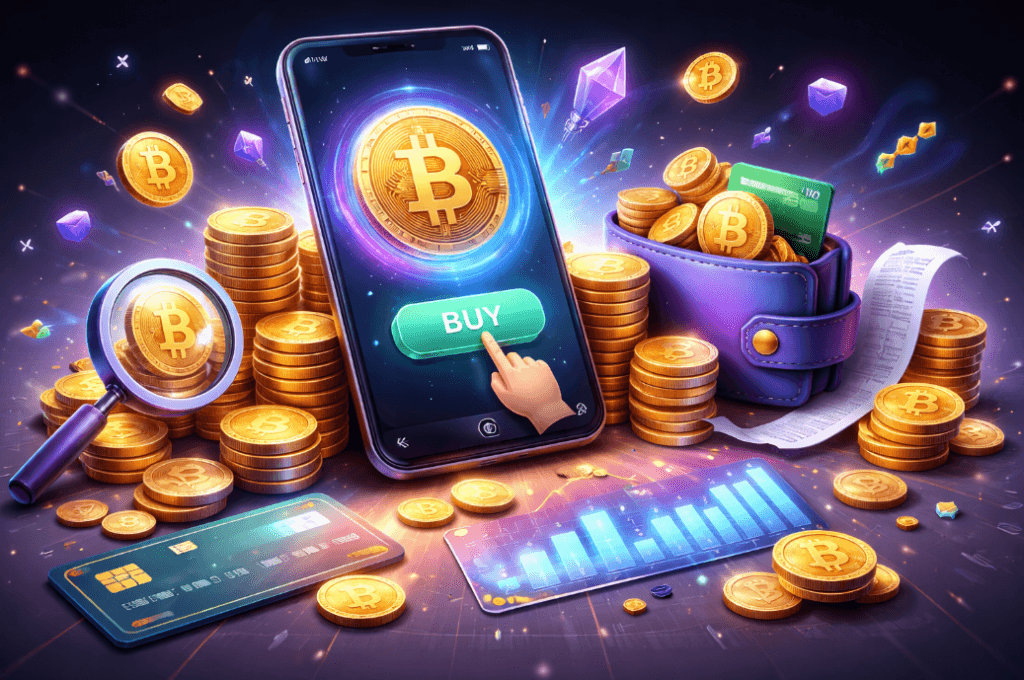
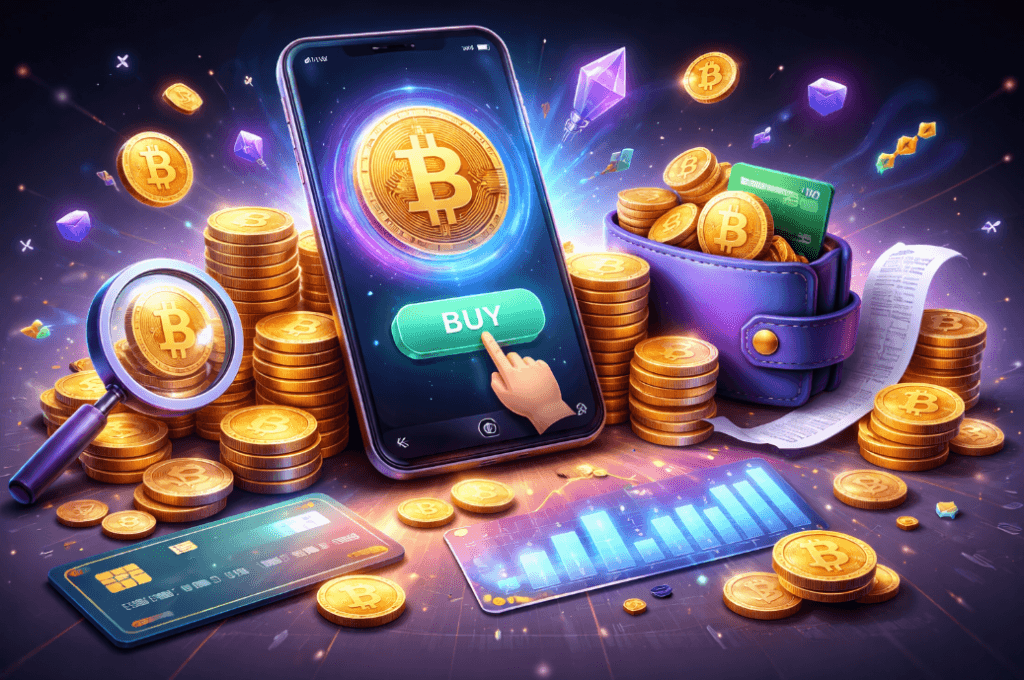
Now that you have euros on the exchange, find the currency you want (e.g. Bitcoin or Ethereum) and click the “Buy” button. Congratulations, you’ve just taken your first step into the world of digital finance!
Step 5: Moving to Safety (Your Wallet)
This is the most important piece of advice. If you leave your cryptocurrencies on the exchange, you are not their true owner. As they say: “Not your keys, not your coins”. Move your cryptocurrencies to your own wallet.
Hot wallets: Phone applications (e.g. MetaMask).
Cold wallets: Physical devices (e.g. Ledger or Trezor), which are the most secure option in the world.
For more details on secure storage and technical steps, download my free e-book
A Detailed History: From Shells to Bitcoin
To understand why the question of how to buy cryptocurrency is so important today, we need to look at the history of money. Money has changed its form throughout the millennia. We started with barter (shells, salt), moved on to gold, and then to paper money, which was once tied to gold.
In 1971, that link was severed. Today, governments print money out of thin air. This causes inflation (your €100 today buys less than it did five years ago). Bitcoin is the first money in history with a predetermined and limited supply. No one can print more Bitcoin. This gives it the property of “hard money”, similar to gold, except that it can be sent anywhere in the world in a matter of seconds.
Why is Bitcoin “limited”?
Bitcoin’s algorithm stipulates that there will only ever be 21 million coins in circulation. This is in complete contrast to the euro or dollar, where central banks print new billions with every crisis. When the money supply increases, its value falls. Bitcoin solves this problem with its immutable code.

Smart Contract Technology
When you learn how to buy cryptocurrency, you will discover that Bitcoin is not the only player. Ethereum introduced the concept of smart contracts. This is computer code that automatically executes when certain conditions are met.
Imagine a coffee vending machine: when you insert a coin and press a button, the machine dispenses coffee. Nobody can stop this process midway or change the rules. This is what enables the development of DeFi (Decentralized Finance), where people can lend money or take out insurance without banks. This is a revolution happening right now, enabling new ways to earn money.
How to actually make money with cryptocurrencies? (Strategies for success)
Many beginners in Slovenia make the mistake of buying cryptocurrency and simply hoping for the best. Let me tell you, without a plan there is no success.
Strategy 1: The DCA Method (Dollar Cost Averaging)
This is the safest strategy. Instead of investing all your money at once, you invest a fixed amount every week or month. This reduces the risk of buying everything at the peak price.
Strategy 2: Staking (Staking for passive income)
Some cryptocurrencies allow you to “lock” your coins into the network. In return, you receive rewards.
Strategy 3: Yield Farming
This is a more advanced method where you lend your coins to decentralized exchanges to enable trading. In return, you receive a share of the fees. Earnings can be high, but the risk is also greater.
All these strategies are described in detail in my free e-book, which you can find here
8. The Psychology of Investing: Your Biggest Enemy is Fear
Investing is 10% technique and 90% psychology. The biggest mistake beginners make is panic. When the price of Bitcoin drops by 10%, many start selling out of fear. Successful investors, however, buy more at that point, because they know the investment is long-term.
The second mistake is greed. When prices rise, people invest money they cannot afford to lose, hoping for quick wealth. The key to success is discipline. Only invest what you can afford to lose, and have a long-term plan. Fear of missing out (FOMO) is your biggest enemy.

Market Cycles and Bitcoin Halving: The Engine of Growth
The crypto market moves in cycles. The main driver of these cycles is the Bitcoin Halving. This is an event that occurs and halves the reward for mining new Bitcoins. Understanding this cycle allows you to enter the market at the right time and not at the very peak of euphoria.
Security: How to Recognize and Prevent Scams?
In the crypto world, there is no bank you can call if you forget your password. Security is your priority number 1.
Two-Factor Authentication (2FA): Always use apps like Google Authenticator, not SMS messages.
Private Key (Seed Phrase): This is a sequence of 12 or 24 words that serve as the “key” to your wallet. Never type them into a computer — write them down on paper instead. Whoever has these words has access to your money.
Beware of scams: If someone promises to double your cryptocurrencies if you send them to them – it’s a scam.
Different Types of Cryptocurrencies
Not all coins are made to become money.
Layer 1 solutions: These are base blockchains, such as Bitcoin and Ethereum.
Layer 2 solutions: Projects that help base networks operate faster and more cheaply (e.g. Polygon, Arbitrum).
Stablecoins: Coins pegged to the dollar (USDT, USDC). We use them for protection against volatility.
AI Cryptocurrencies: Projects that combine artificial intelligence and blockchain (e.g. Render, Bittensor).
Taxes in Slovenia: What does FURS say?
Slovenia is currently quite a favorable destination for crypto investors, although the rules are changing. For individuals who simply buy and hold cryptocurrencies as an investment, it is generally the case that profits are not taxed, unless this is considered to constitute a business activity. I always recommend keeping accurate records of all purchases and sales.
Project Analysis
Let’s look at which projects are currently in the spotlight:
Bitcoin (BTC): Digital gold and the backbone of the market.
Ethereum (ETH): The king of smart contracts and the DeFi ecosystem.
Solana (SOL): An exceptionally fast network for mass adoption.
Cardano (ADA): A scientifically backed project with an emphasis on security.
Polkadot (DOT): Interoperability between different blockchains.
Chainlink (LINK): A key bridge between the real world and the blockchain.
Avalanche (AVAX): Fast financial applications and subnets.
Polygon (POL): The leading scaling solution for Ethereum.
Render (RNDR): Decentralized GPU power for AI and graphics.
Tether (USDT): The largest and most liquid stablecoin.
How to analyze the market like a professional
Successful investors don’t buy based on emotions. They use:
Market Cap: The total value of all coins. Don’t just look at the price of an individual coin, but at the market capitalization.
Trading Volume: How much a coin is actually being traded. Low liquidity means greater risk.
Fear & Greed Index: An indicator that tells us whether people are too fearful or too greedy.
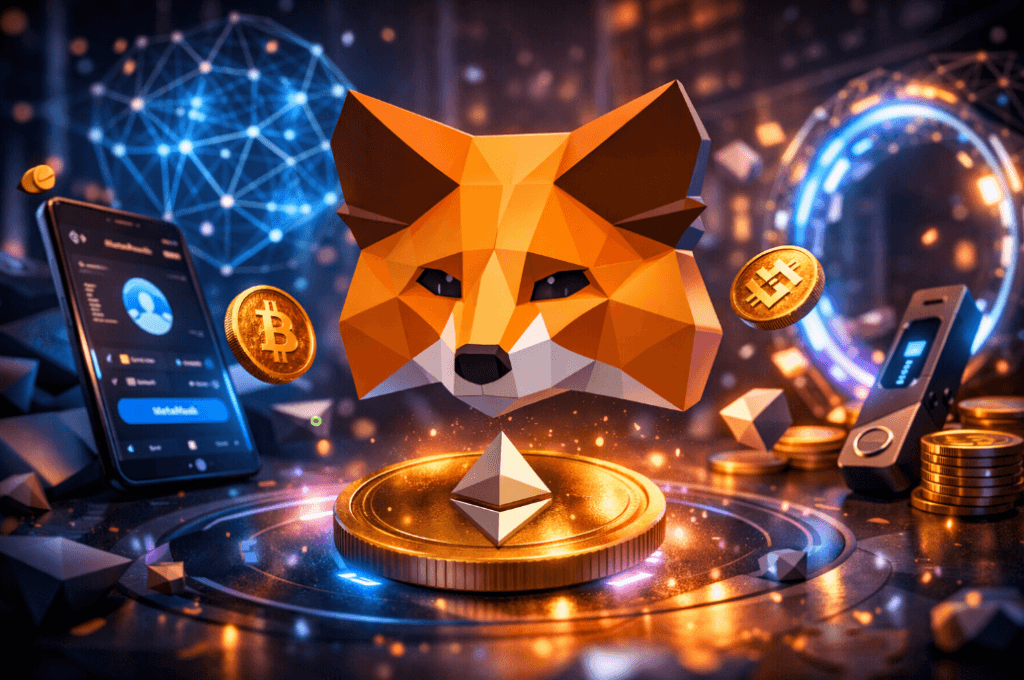
Technical guide: Setting up your first MetaMask wallet
MetaMask is the most popular wallet in the form of a browser extension. It allows you to interact with decentralized applications.
Download MetaMask from the official website.
Create a new wallet.
Safely write down your security words (Seed phrase).
Add networks (e.g. Binance Smart Chain, Solana).
You can now receive and send cryptocurrencies directly from your browser.
The most common beginner mistakes and how to avoid them:
Investing more than you can afford to lose.
Falling for influencers on social media.
Losing your seed phrase.
Sending cryptocurrencies to the wrong blockchain.
The future of money: Web3 and the Metaverse
Cryptocurrencies are just the tip of the iceberg. We are entering the era of Web3 – a decentralized internet where you own your data. The Metaverse is a digital world where cryptocurrencies will be the primary means of payment for virtual real estate, digital fashion, and services.
How to recognize a Scam (fraud)
There are many scams in the world of crypto. Always check the official website of the project and never give your private key to anyone.
The difference between an exchange and a wallet
An exchange (e.g. Binance, Kraken) is a place to buy and sell. A wallet (e.g. Ledger, MetaMask) is a place for storage. For security, always move larger amounts to your own wallet. Remember: as long as the money is on an exchange, you are not the one controlling the keys.
Frequently Asked Questions (FAQ)
Is Bitcoin legal? Yes, it is completely legal in Slovenia.
How much do I need to get started? You can start with as little as €20.
Can I lose all my money? Yes, cryptocurrencies are a high-risk investment.
Advanced Strategies: DeFi Yield Farming
Once you’ve mastered the basics of how to buy cryptocurrency, you may want to explore advanced avenues. Yield farming involves providing liquidity to decentralized exchanges in return for a share of the fees. These strategies require more time, but offer greater returns.
The Importance of Technical Analysis for Beginners
Even as a beginner, you need to understand the basics of charts. Technical analysis helps you understand when the market is “overbought” (prices are too high) and when it is “oversold” (an opportunity to buy). Learning simple indicators, such as the RSI (Relative Strength Index), can save you thousands of euros in losses.
How to Build a Balanced Crypto Portfolio?
Never put all your eggs in one basket. A smart investor divides their assets:
50% in “safe” projects (Bitcoin, Ethereum).
30% in promising Layer 1 projects (Solana, Avalanche).
20% in smaller, riskier projects with high growth potential.
The Importance of Continuous Education
The crypto world changes every week. What worked last year may not work this year. Follow verified sources of information, read technical documents (whitepapers) and be critical of the news you hear in the media. Knowledge is what separates the winners from the losers.
Conclusion: Your Path to Financial Freedom Starts Today
The world of cryptocurrencies may seem complex, but with the right approach and patience it can become your most powerful ally in achieving your financial goals. The most important thing is not to stop at just reading this article. Take the first step. Open an account, buy a small amount and start learning through practice.
Remember: the biggest gains are not reserved for those who are lucky, but for those who are willing to invest time in their knowledge. The future is digital and you have the opportunity to be part of it today.
If you want to skip months of independent research and mistakes, I invite you to download my free e-book
Good luck on your path to success!