
Facebook is today the largest and most popular social network, which is why there is fierce competition among companies advertising on this platform. That is why it is important to learn how to write creative Facebook ads that will promote your business, products or services you offer, and thereby attract new customers.
Many believe that images are the key to success when it comes to advertising on Facebook, but this is only partially true. The emphasis is on the message conveyed by the images, however these images alone are not as effective in ads without a strong and compelling message.
That is why in this article I am sharing some tips on how to create a creative ad so that you can successfully sell your product or service.
- Tailor your ads by targeting specific target groups
When writing an ad, the message must match the needs and interests of the audience. That is why every company that wants to attract the right customers for their product/service must ask itself a few questions about the audience: How old are they? What are their interests? What are their problems? What do they need?
If you want to create successful and creative Facebook ads, use Facebook targeting to narrow down your audience, and then craft a message that is specifically intended for them.
Facebook offers some of the best ad targeting options available, allowing you to become very precise about your target audience, promotions and ads. This is especially useful if you do not have much existing data about potential customers.
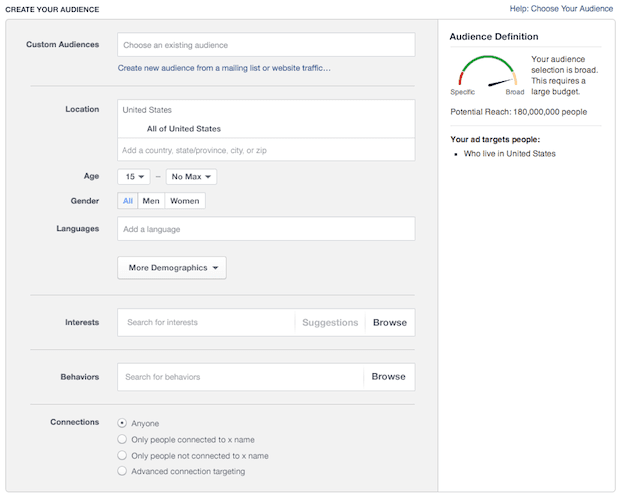
The Facebook “Core Audience” feature allows you to create your target audience based on five criteria:
Location
Target specific countries, cities, communities, zip codes, etc. You can also set a radius around a central point – for example, users who are no more than 5 miles from zip code 1000.
Demographics
This targeting option includes age, gender, education, job, language, political affiliation, income, relationship status and more.
Interests
This option includes hobbies and other interests that your audience may have.
Behaviour
Facebook considers users’ digital behaviour in this section, including device usage, network speed and purchasing behaviour.
Connections
This targeting parameter allows you to decide whether you want to target people who are connected to your Facebook page and are therefore already familiar with your brand to some extent, or whether you want to exclude these individuals and focus on increasing brand awareness and acquiring new customers.
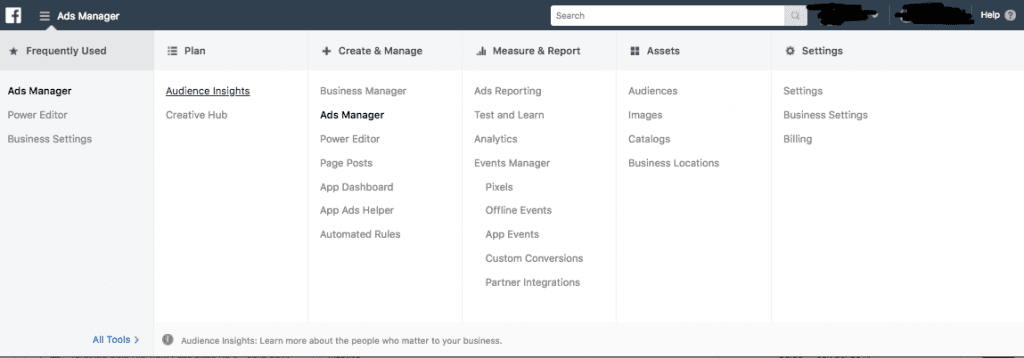
With the Facebook “Audience Insights” tool, you can get ideas for building your audience. Audience Insights tells you the location of your current followers, demographics, interests, behaviour and connections – these parameters can then be used for your audience when creating a new creative ad.
Below you will find some more ideas on how you can use audience targeting options in your Facebook ad strategy:
Targeting audiences based on life events
There are many life event targeting options available. These can include engagement, marriage, pregnancy, birth of a child, a new job, graduation, a recent move to a new apartment or house, retirement, an anniversary, the loss of a loved one and much more.
Think about the contexts in which your products are used and consider the life events that might fit such a situation.
Targeting based on weather
Although this is not a native targeting option on Facebook, there are tools you can use to automatically customize ads and activate/deactivate ads based on local weather conditions. A well-known example is when the company Indow Windows created an ad using the WeatherAds app to promote their window insulation products. They targeted cities or zip codes where the temperature drops below 2 degrees Celsius.
Targeting based on hobbies
Audience Insights are particularly valuable for this Facebook ad targeting strategy. Look at the hobbies that are popular among your audience and select those that are not directly related to your niche, products, or services.
A brand like Orca (https://orcacoolers.com/), which sells rugged outdoor coolers, might anticipate common hobbies such as fishing and hiking within its target market. Audience Insights may also reveal interest in specific music and concerts – in this case, you might consider targeting these people with ads suggesting that coolers are great for tailgating before concerts and festivals.
2. Don’t forget about your customers – use Facebook Custom Audiences
Facebook Custom Audiences are groups of Facebook users who are familiar with your brand to some degree. This means they have already visited your website, are followers of your Facebook page or follow your posts, have signed up for your emails, made a purchase, or otherwise engaged with your brand.
Facebook essentially takes the customer data you provide, matches that data against Facebook users, and ultimately connects your customers to individual users. Facebook then creates groups of these people, allowing you to target them with various advertising campaigns.
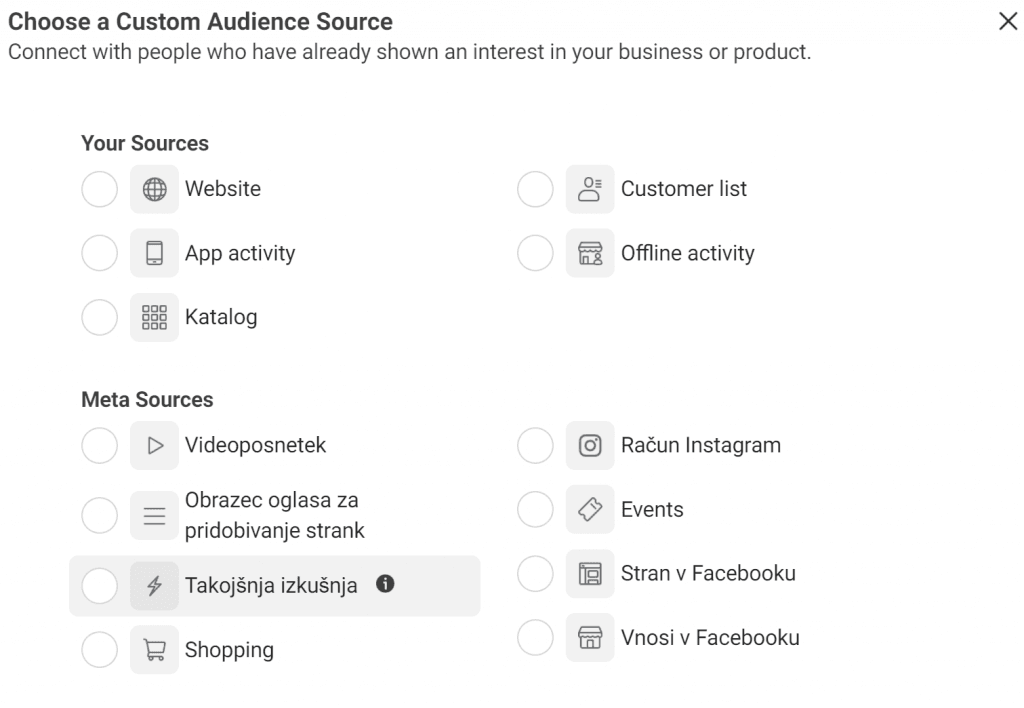
You can create several types of Custom Audiences:
4 are described in more detail below, while the remaining options can be seen in the image below.
- Audience based on visits to your website
This audience is created by targeting users who have visited your website or a specific section of your website.
2. Audience based on your mobile app usage
This segment consists of people who have used your mobile app or performed a specific action within your mobile app.
3. Customer list
Import a spreadsheet with a list of customers and Facebook will match the data against its users to create this audience group.
4. Audience that already follows you on Facebook
These are groups of people who have previously engaged with your Facebook content or ads, including watching a video, submitting a lead form, or viewing your Facebook page.
3. Expand your market by targeting Lookalike Audiences
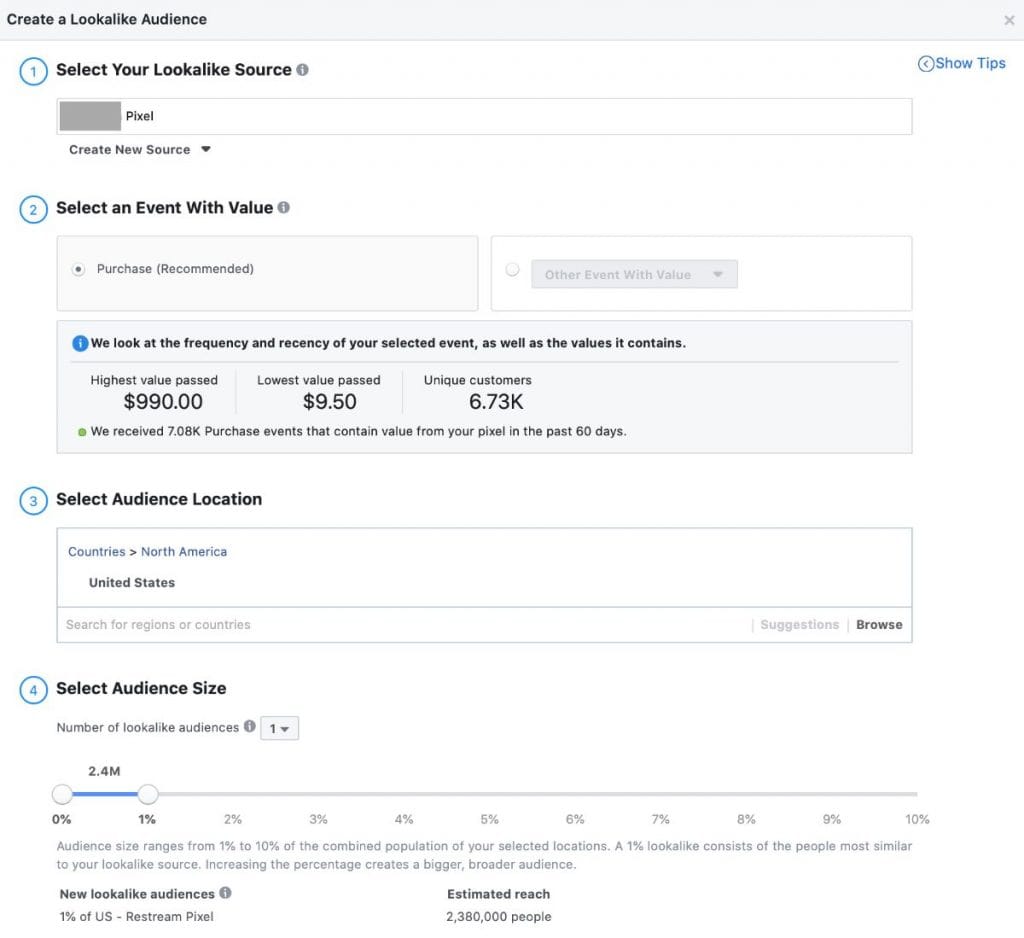
Over time, you will use your Custom Audiences to create new segments with similar characteristics for targeting. These audiences are called Lookalike Audiences.
Lookalike Audiences are valuable because they share a great deal in common with your existing audiences, so you already know what they like and which ads are performing well. In many cases, you can use the same ads you are already running for other targets with your Lookalike Audiences.
This Facebook advertising strategy is an excellent way to acquire new customers. Since you already know the preferences of these groups, you can use proven and effective ad creative to introduce them to your brand, products, and services.
Of course, you can measure how similar your newly created audience is to your original source audience. If the similarity is high, you will be targeting a smaller but more specific group. If there are many differences between the audiences, you will be targeting a larger but broader audience. Facebook allows up to 500 Lookalike Audiences, giving you plenty of room for creativity and experimentation.
4. Retargeting visitors who have already visited your Facebook page
Retargeting ads on Facebook are shown to users who have previously visited your website, online store, or Facebook page. This Facebook ad strategy is an excellent way to maintain relationships you have already established. You can direct users toward specific actions they can take – liking your Facebook page, completing a purchase of a product they have already added to their shopping cart, or viewing a specific section of your website.
With this Facebook ad strategy, there are several retargeting options available (you can read more about this in the article “Remarketing – don’t leave money on the table”). You can include users who have previously:
- engaged with your brand on Facebook;
- visited your website;
- used your mobile app;
- visited a specific section of your website (they were interested in certain products or services);
- added a product (or products) to their shopping cart but did not complete the purchase (did not pay).
5. Check your competition in the ad library (“Meta Ad Library”)
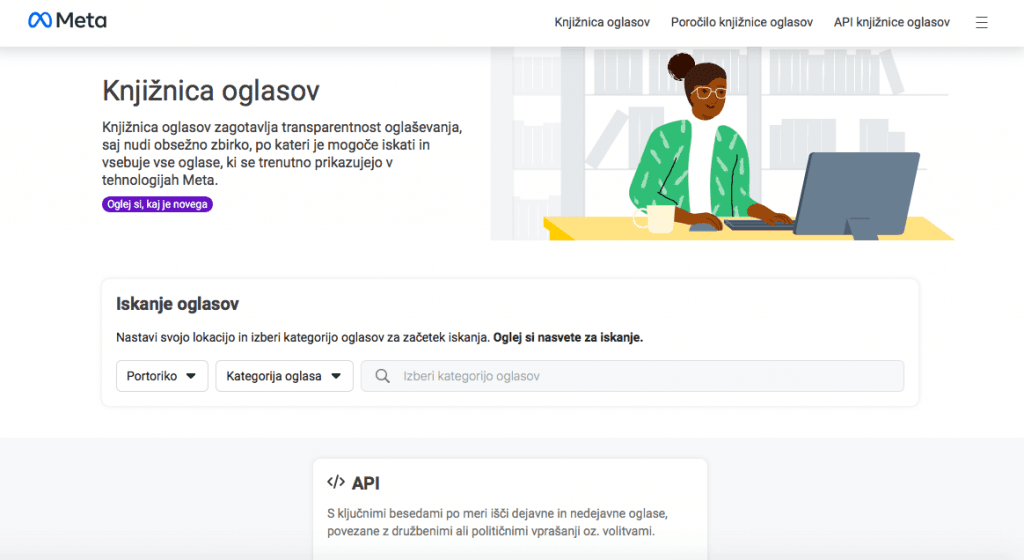
Once you have developed and created your Facebook advertising strategy and built campaigns to promote your brand, also check what your competitors are doing. In 2018, Facebook increased transparency around advertisers and introduced the “Facebook Ad Library” (now known as the “Meta Ad Library”). The tool essentially serves as a repository for all current and past Facebook ads run by any advertiser.
Any user can search for ads using keywords with filtering options by location and four ad categories.
When planning your Facebook ads, it is useful to know which ads your direct and indirect competitors are running. In addition to the written copy, pay special attention to the images and what is written on each image. Also take a look at any ad variations.
You can also see when each ad started running, which platforms it is on, how many different ads each advertiser is using, and whether the ad is active or not.
Analyze your Facebook ad strategy
The most effective Facebook ads are continuously optimized to be successful. It is important to test your Facebook ads to find out what works and what doesn’t, and then adjust those ads accordingly. For example, you can test Facebook video ads versus image ads to see if one type of ad performs better than the other. Another optimization strategy for Facebook advertising is to consider the cost of your ads – cost per click (CPC).
Frequently asked questions about Facebook ad strategy
A. What strategy should I use for my Facebook ads?
For Facebook ads, you can use any of the five strategies outlined above in the post: customizing your ads by targeting specific audiences; don’t forget your customers – using “Facebook Custom Audiences”; expanding your market by targeting similar audiences (“Lookalike Audiences”); retargeting visitors who have already visited your Facebook page; checking your competition in the ad library (“Meta Ad Library”).
B. What are the most effective Facebook ads?
The most effective Facebook ads are targeted at a specific audience defined based on previously collected data, and continuously optimized to improve ad performance.
C. What makes a good Facebook ad in 2022?
A good Facebook ad in 2022 is targeted at your right audience and optimized for the multiple devices your audience uses.
D. What is the best optimization for Facebook ads?
The best optimization for Facebook ads is using the dynamic ads option. Facebook automatically uses the best-performing ad to promote your campaigns.
In addition to the above strategies, which are essential for successfully creating creative ads on Facebook, I am happy to present a few more tips that will make your ads successful.
When writing your ad copy, focus on the goal of your advertising campaign. The ad copy changes depending on what goal you set for each advertising campaign. Companies that are new to the market, for example, simply want to increase their brand awareness, while companies that have been on the market for a longer time want to drive more traffic to their website or gain more likes on their business page.
Write the key message on the ad image
The image in an ad contributes greatly to a successful Facebook ad. If we also add a key message for the people reached by our ad to the image, the ad’s performance increases even further. It is therefore logical to place key messages on that image. However, do not forget that Facebook has set some rules for permitted images. Text must not take up more than 20 percent of the image. Text logos and watermarks also count as text, so keep your message brief.
Keep the ad clear and simple
Successful Facebook ads are usually short and simple, so one of the basic rules when writing an ad is to craft it so that your message is conveyed quickly. Simple words and clear, direct language will help you capture people’s attention more than complex words or neologisms that are difficult to understand. Your message must inspire, entertain, and persuade your audience, so avoid using unnecessary words.
Start with a question at the beginning of the ad
A bold question posed right at the beginning of the ad will capture the audience’s attention. Even better is if the question is framed so that the only possible answer is “yes.” In this case, an excellent tip is to start your question with the word “do you want” and then list one or two benefits that your product or service offers. This will spark the interest of people who see your ad and even encourage them to nod their heads in approval.
The next line in your ad should answer the question and offer them a solution for how they can obtain the promised result.
Use numbers in your ad
Companies that sell physical products in particular can create successful Facebook ads by using numbers in their ads. For example, by including information about how many products they have already sold or how many customers have already decided to purchase their product. You can also include the price of your product in the ad, as this is information that most people who see the ad are typically interested in.
Choose an attractive headline
Headlines are the first thing users read when they see an ad, so they need to be compelling. When writing headlines for successful Facebook ads, it is important to focus on a single idea or point, so simplicity is key. At the same time, special characters, numbers, and the word “new” attract attention. In addition, the message must be appealing so that it entices the reader to click on the ad immediately.
Use recommendations and reviews from your customers
Your customers’ opinions are very important if you want to create successful Facebook ads, as people generally need proof that the advertised product is trustworthy. Companies advertising their products/services can even use comments or messages from other Facebook users.
Test your ads before publishing the real ad
Facebook allows you to test the ads you create. This is beneficial, as the testing can help you improve your ad. It is generally a good idea to create two different ads and test them to find out which one resonates most with the audience. For example, you can publish an ad with a question and an ad with a simple statement and see which one gets the most likes, comments, and purchase clicks.
May these tips serve you well in preparing your creative ads. Use at least some of them and test what works best in your case.
You can also watch the free webinar “How to earn or sell more with Facebook ads?”. You can find the webinar at the following link: https://zannekrep.com/brezplacni-webinar4/.