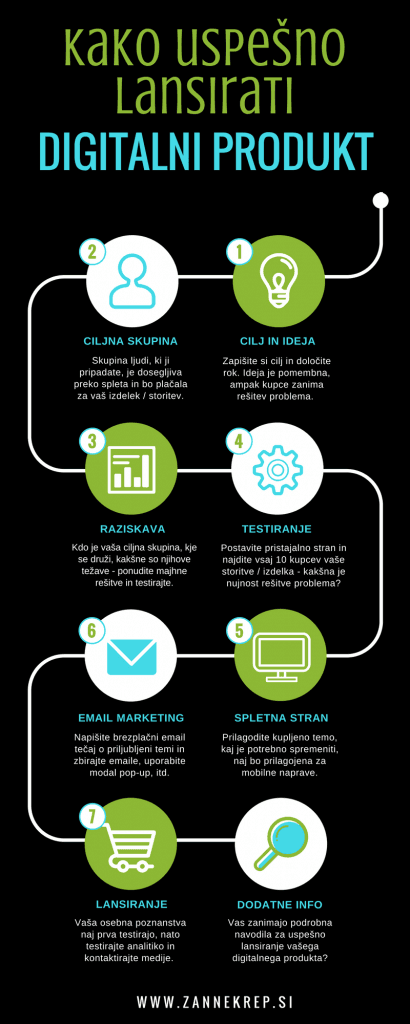

I read the book Marketing for product people, written by Justin Jackson, which covers tactics for launching a digital product.
According to Justin, success is a combination of the right timing, knowledge, good execution, and consistency — for example, completing assigned activities on a daily basis.
Start with a goal
It’s important to write down your goal, set a deadline, and carry out a daily routine — for example, working two hours every day on your project and turning off all distractions, such as Facebook.
The idea isn’t everything, but it is important
Many entrepreneurs fall too much in love with their idea. Remember that your idea doesn’t interest customers — what interests them is their solution to a problem. If you want to succeed, you still need a good product, because with a poor product even great marketing won’t get you far in the long run. The author says that the most important marketing tactic is listening to your customers. At the beginning of your entrepreneurial journey, you need to answer three questions: which markets you will focus on, whether you have the right approach for that market, and whether customers are actually willing to pay for your digital product.
The author of the book recommends that you don’t start your digital product with an idea, but rather by thinking about the customers you will be targeting.
Finding your target audience
FreshBooks, which helps you issue invoices online and has over 5 million customers, initially focused on a niche they knew well — designers. They also chose a niche they knew would pay, since customers in that niche pay monthly for products like Adobe software.
When choosing your target audience, focus on:
- a group of people you belong to, are connected with, or understand well,
- one that is easily reachable, for example online,
- people who are willing to pay for your product or service.
Also consider which target audience you are most passionate about or know more about than others. Of course, it is once again very important that this target audience is actually willing to pay.
A very important question is whether you will focus on the B2B (businesses) or B2C (consumers) market. Personally, like the author of the book, I prefer to target businesses, although I have worked extensively with B2C in the past, simply because businesses have more money available to spend.
Next comes research
The author of the book recommends researching your target audience in the following way:
- ask yourself who your target audience is and where they hang out
- observe this group and take notes on their problems, such as questions on Quora, forums, etc.
- try to identify the biggest challenges your target audience faces
- initially offer small solutions and monitor the response — for example, a 7-day email course
- if the test proves effective, start building the actual product
It’s easier if you have an online solution (product) for customers, as it’s also easier to conduct research and observe potential buyers — for example, reading forums, posts in Facebook groups, etc. With tools like Pocket and Keeeb you can save recurring topics. The author says you need to observe your target audience for at least 3 to 6 months — I personally think such a long observation period isn’t necessary and that doing it for, say, one month will be sufficient. In my opinion, what matters more is the quality of the research itself.
How to test the solution you have for customers?
1. Set up a landing page e.g. with Leadpages
An example of a landing page is The Tiny Designer, where Jarrod Drysdale offers a free five-day email course. The next example is seanwes, where Sean acquired hundreds of thousands of email addresses from customers who wanted to get a free guide on writing. He later also created a video course Hand Lettering Tutorial.
2. Find at least 10 customers who will buy your solution
What marketing approach should you use for a digital product?
Focus on the problem that your target customers have. Before you start building a product, ask yourself how much customers are willing to pay for a solution to the problem and how much they want to find a solution to the problem.
An example regarding customers’ desire for a solution to a problem: A dentist, for example, has patients who experience different levels of pain (those who are in a lot of pain and those who are in less or no pain at all). You must be aware, however, that there will always be problems that customers will not pay for. An example of customers with a high level of pain is, for instance, Zapier integration, while an example with less pain is Slack communication.
The exposure of your marketing message also depends on the level of pain:
- high level of pain requires only two exposures,
- medium level of pain three to seven times
- lower level of pain up to a hundred times.
There are also different strategies — for example, for high pain, SEO (search engine optimization) is recommended, while for medium pain, retargeting is recommended, where you target those who already know you. For low pain, the best strategy is viral marketing, i.e. marketing that spreads like a virus — for example, creating a viral video. There are also differences in how frequently the pain occurs — some appear repeatedly, while others only occasionally, for example, submitting financial statements for companies is a pain that occurs only once a year.
The right price for your digital product
The first option is value-based pricing — for example, instead of paying $2,000 for a conference, you can get an online course for $200. The second option is pricing based on the customer’s expected lifetime value (how much the customer spends over the entire period), and here it is important that you spend less to acquire that customer than they will spend, as this gives you a profit. The next option is to consider different pricing policies. For example, if you decide on three different price packages and offer them to your customers, the founder of GumRoad Ryan recommends that if the first price is $29, the middle option (2 to 2.5x more expensive) should be, for example, $79, and the last option is then 5x more expensive than the original, so for example $149. Research has shown that some customers will always buy the most expensive option, so you need to offer them that as well.
Website
Regarding the website, the author advises purchasing a ready-made website theme and customizing it to your needs. For purchasing a theme, you can use Themeforest, Wrap Bootstrap, Launch effect, Leadpages, Unbounce etc. Set up Google Webmaster Tools so you can see what people are searching to find you on Google and which positions you still need to improve. Google Webmaster Tools is important to monitor so you can also see if you need to update or change anything on your site, as the Google search algorithm changes up to 600 times per year, and although these changes are small, every so often a so-called major update occurs (such as the Google Panda update), which can significantly change your positions in the search engine. It is also very important that your website is mobile-friendly, otherwise Google will penalize you with a lower search engine ranking. To check whether your site is mobile-friendly, use Google Webmaster Tools, which tells you how the Google bot sees your website on a mobile device (mobile-friendly test). Also install segment.io, which handles all your integrations and records all data. Track specific events, for example when a user subscribes to or unsubscribes from your mailing list, and which pages users view in your sales funnel. The author advises also enabling Google Analytics and Mixpanel, which will be essential for identifying goals and sales funnels. In Google Analytics you can also set up a sales funnel, which in the author’s opinion represents the steps that lead a user to your goal. For sales funnels, Mixpanel is better, as it also allows sending notifications, for example five days after signing up to your email list via SMS, email, or in your mobile app if you have one. Use the information to know what works. Google Analytics is useful for various things, for example bounce rate, which refers to the percentage of users who land on a webpage and leave without viewing any other subpage. With Google Analytics, it is important to use UTM links, as this allows you to track campaigns in more detail in Google Analytics (create UTMs with Campaign URL Builder). Analytics is also useful for tracking goals such as email list sign-ups, purchases, or free trials of your product, etc. People usually don’t just type in your website and make a purchase — multiple processes follow. The final step on your website is the email list (mailing list), and you should treat this as your treasure. People come to your website and leave, but if you have their email address, you have additional opportunities to communicate with them. The author recommends Mailchimp, which is free up to 2,000 email addresses.
Email marketing
The author believes that email marketing is the best marketing channel (he has tried many, but always comes back to it) along with content marketing, where you build on content. Research shows that as many as 91 percent of adults check their email every day, while among teenagers only 11 percent do so. When you have a digital product, most people naturally want to target people with money. A study conducted by Lifehacker also showed that people check their email first thing in the morning.
How to build an email list
The author advises that you write a free email course on a topic that interests your target audience. He has a five-day free email course. Collect email sign-ups also in the posts you write – the best option for collecting email addresses according to the author is a pop-up modal, which appears when the user has read a certain amount of text and only then does the pop-up window appear, even though for some people this is annoying, it achieves a high email sign-up rate. Convertkit for example allows you to choose how this pop-up should appear, e.g. when the user has read 65 percent of your page or for example after 20 seconds of reading. An interesting option are also Twitter Cards, which few people know about, where your ad can automatically connect with the email provided to Twitter for those who click on, for example, a free e-book download in a Twitter ad. Consider offering a free e-book, for example Intercom created an e-book Intercom on Product Management. If you don’t know what to write in an e-book, you can simply compile opinions from other experts. It is also useful for collecting emails to have a free tool for your target audience, e.g.
a free tool like the one Bidsketch has called Ultimate Web Design Proposal Template.
Landing page
It is a web page with a single goal of converting users, e.g. gaining more emails, more purchases, etc. The headline is very important, where you need to ask yourself who it is intended for, what their biggest problem is and in what way you have a solution to their problem. The landing page should also contain at the top for example a video, social proof (media coverage, well-known personalities), a call to action, i.e. what your potential target audience needs to do. At the bottom of the page there should not be excessive text, for example a description of who is behind the project, a link to you and a contact option. An example of a landing page that the author gives as a good example is Bidsketch.
How to write good content, e.g. for your blog
The most important thing is research in communities where your readers hang out, e.g. designers are on Designer News, marketers on Growth Hackers, etc. Use visual content such as illustrations and diagrams. But it is not enough to just write content — you need to make sure as many of the right people see it as possible. You achieve greater reach by reaching so-called influencers, who already have their own audience in the market you are targeting. These can be, for example, popular bloggers, podcasters, entrepreneurs, journalists or those with a large social media following. Also consider reaching out to communities such as Facebook groups, reddit, etc. Also use Betalist to gather user feedback.
Example email for influencers in your industry (it would still need a bit more detail about the blog content itself):
Hi Žan,
I know you receive a lot of emails, so I’ll be brief. I’ve started a new blog where I’d like to write about how difficult it is to start a business, with practical examples on xxx. I’d like to share a post with you, if you’re interested of course. Can I send you the link once the post is written?
The author advises that you do not include a link to your website in the first email and that you be as unobtrusive as possible. When they respond positively, ask them for their feedback and then based on their response also improve your post and later launch it with their help as well.
Launching Your Digital Product
To make wider audiences aware of your product, you will need both your network (e.g. friends, your social media) and larger communities such as reddit, Hacker News, Product Hunt, etc. Your first step should be to build on your personal acquaintances – your network, e.g. those who first test your product, your colleagues, loyal followers, your mentors, members of groups you are part of, etc. Don’t forget to test analytics, add-to-cart functionality, page links, etc. before launching your digital product. If you want to get media coverage, use submit.co. Find platforms with which you can create integrations and connect. Build relationships by inviting someone to lunch. Consider starting a podcast, as this way you can reach more people. It is also interesting to create your own meetup (gatherings for groups of people with similar interests). When launching, make use of retargeting ads, which appear when a visitor comes to your website and does nothing. Using so-called web cookies, you can then show the same user ads on, for example, Facebook, Google, and even mobile apps. The easiest way to create retargeting ads is on Facebook.
An example email to send to your personal network – acquaintances:
Hi Žan,
As you know, I’ve been working on my digital product for a while now, which helps with xxx. I will be launching the product on xxx and I could use your help, as I want it to reach as many people as possible.
There are two things where I would need your help:
1. Share my page with your friends, the link is at xxx
2. On the launch day, submit my product to Product Hunt (feel free to change this as you wish)
Could you do that?
Best regards,