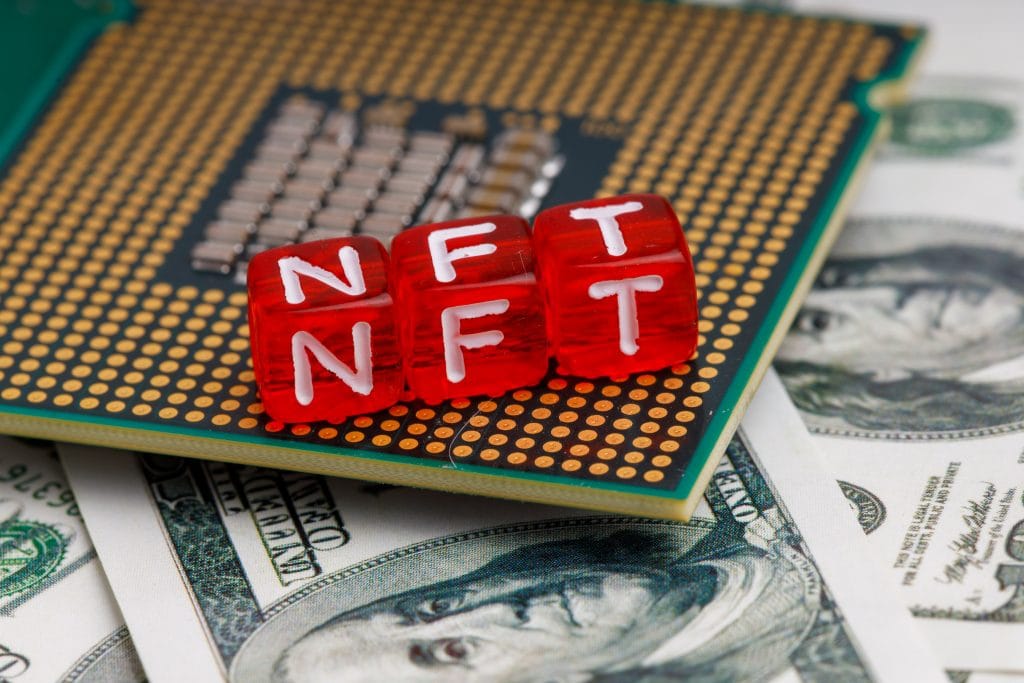
NFT is an abbreviation that we hear frequently these days. Many people are buying them, yet they don’t even know what it means. NFT translates to: non-fungible tokens.
As the name itself tells us, the main characteristic of non-fungible tokens (NFT) is that they are not interchangeable. Fungibility refers to the property of an asset that can be exchanged for any other individual asset of the same type.
Good examples of this are currencies, precious metals, and stocks: every $1 banknote is completely identical to another $1 banknote, the same applies to any ounce of gold or share in a particular company. Non-fungible assets, however, cannot be exchanged in this way. The best example from everyday life are paintings and other works of art, as each one is unique (one Picasso painting cannot be exchanged for another, and different paintings likely vary greatly in value).
An NFT is more like a painting than a currency, and its uniqueness makes it suitable for many different (either/or) use cases. NFTs can represent everything from art to certificates and proof of ownership and much more, as their authenticity is extremely easy to verify and transfer from one user to another. In order to store NFTs on a blockchain, they require a different standard so they can be stored on a specific block in the chain, and can later be retrieved or modified if their state ever changes. For example: the Ethereum network uses different token standards rather than ERC-20, which is the most popular standard for fungible tokens. This is because NFTs, due to their different attributes, need to be deployed on the blockchain differently than regular tokens/cryptocurrencies.
The most popular token standard for NFTs on Ethereum is ERC-721, which was created in early 2018. However, with the rise of gamification and broader use cases for both fungible and non-fungible tokens — along with the need for both types of tokens for use within the same applications — this standard proved to have significant shortcomings. Most notably, it only supports NFTs, which is typically very inefficient in terms of gas costs for minting new tokens. These two issues were addressed by ERC-1155. This is a token standard developed by Enjin that allows an unlimited number of fungible and non-fungible tokens to be minted and managed within a single smart contract.
USE CASES
Without a doubt, one of the greatest challenges of cryptocurrencies is decentralization (decentralization means that no single entity can gain control over the network). Given that cryptocurrency claims we need a new form of agreement system between parties for executing transactions and verifying contractual arrangements, it is logical that it would penetrate every sector where this is possible.
Artists, photographers, and musicians can potentially benefit from NFTs, precisely because the music and art industries are highly centralized, and creators are poorly compensated for their work. Those who are actually paid are the record labels and art galleries that hold a monopoly over these industries. With NFTs, artists and similar creators can now simply mint an original in a digitized space. Compared to the current system (signed documents, etc.), this provides the buyer with authenticity in a much easier way, while also allowing the minter to issue something in connection with the NFT, such as a smart contract for royalties. Now, every time an NFT changes hands, the artist receives a small sum for the work they created. The artist can now put the NFT directly on a marketplace instead of placing it in an art gallery.
NFTs also help in solving a variety of problems with smart contracts and other issues related to DeFi. One such possibility is obtaining the deed to a house and converting it into an NFT. Suddenly, mortgages on houses can be issued through cryptocurrency networks and paid out via smart contracts, without the need for intermediaries such as banks.
It is easy to imagine many more use cases, such as a politician encoding an NFT of the changes they will make once elected. After being elected, this NFT could be leased into another NFT that holds the country’s legal code. This would ensure that politicians actually stand by their platforms and their promises to do what they pledged.
WHY INVEST IN THEM?
NFTs are “non-fungible” because they cannot be replaced with another identical item. They are either one-of-a-kind or extremely scarce, such as baseball cards of famous players. NFTs are connected to cryptocurrencies because they are tokens on the blockchain.
Those who have purchased NFTs have likely done so because they expect the tokens to increase in value, or because they wanted to support their favorite artist. Some, however, believe that this trend has gotten out of hand.
Some of the most outrageous NFT purchases include paying $390,000 for a 50-second video created by Grimes, $6.6 million for a video by Beeple, $3 million for the first tweet by Twitter co-founder Jack Dorsey, and $69 million for an image created by Beeple. To put that last one in context; less than ten years ago, Monet’s Nympheas sold for $15 million less than Beeple’s famous digital painting.
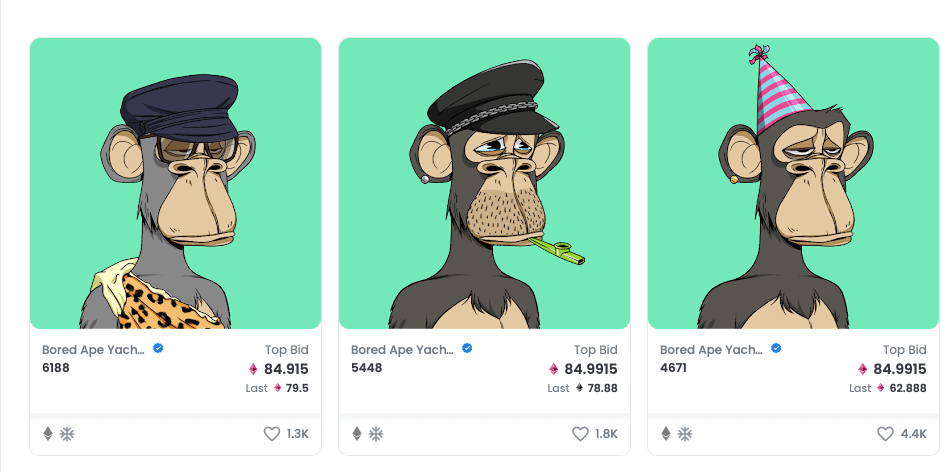
The most well-known and sought-after are certainly the Bored Ape Yacht Club NFTs.
Bored Ape Yacht Club is a collection of 10,000 unique “apes” – digital collectibles living on the Ethereum blockchain. They have been selling daily on OpenSea starting from $13,000.00.
Artists can even enable a feature that pays them a percentage of the purchase price whenever their NFT changes hands.
HOW TO BUY NFTs?
Invest in crypto
The first thing you will need to do for your first NFT is to invest in cryptocurrency. NFTs started on the Ethereum (Eth) platform. There are also a few other platforms for NFTs, but we will use Ethereum for our example. You will need some coins, because whichever platform you choose for creating your NFT, including Eth, will charge you service fees that need to be paid in – you guessed it – cryptocurrency.
Let’s not forget to mention that Ethereum is one of the leading platforms, but there are also more affordable ones, such as: Tezos, Solana, Polygon.
In case you are not familiar with the process of purchasing cryptocurrency, the steps are as follows:
Create a wallet. This step can be accomplished with various browser extensions or wallet applications. Some of the most common ones are: Coinbase Wallet or MetaMask. The process then requires nothing more than creating an account, which in the case of a non-custodial wallet typically requires very little personal information.
Buy some coins. Once you have created your wallet, the next step in the process is purchasing cryptocurrency. Using Eth as our example, this process is generally quite straightforward – nothing more than pressing “buy” from the Ethereum interface. Crypto can be paid for in several ways, including Apple Pay or even your own personal debit card. However, be careful, as the price of cryptocurrency, including the ETH coin, can fluctuate significantly.
At this point, you are done. The only remaining thing is to keep track of the private key that will be assigned to your cryptocurrency and then transfer the crypto to your wallet. There are a few additional things to know about the process and some potential variables, but at a basic level, that is all you need to know about investing in cryptocurrency in order to create and sell your own NFT.
Now that you have some cryptocurrency to pay for existing NFTs and/or create your own, the next step is choosing an NFT marketplace.
An NFT marketplace is nothing more than what it sounds like: a website for virtually listing your own NFT or investing in an already existing NFT. Here are some of the most common ones, most of which you can join for free:
- OpenSea (Polygon).
- Objkt (Tezos)
- Solsea (Solana).
- Magiceden (Solana).
- SuperRare.
- AtomicMarket.
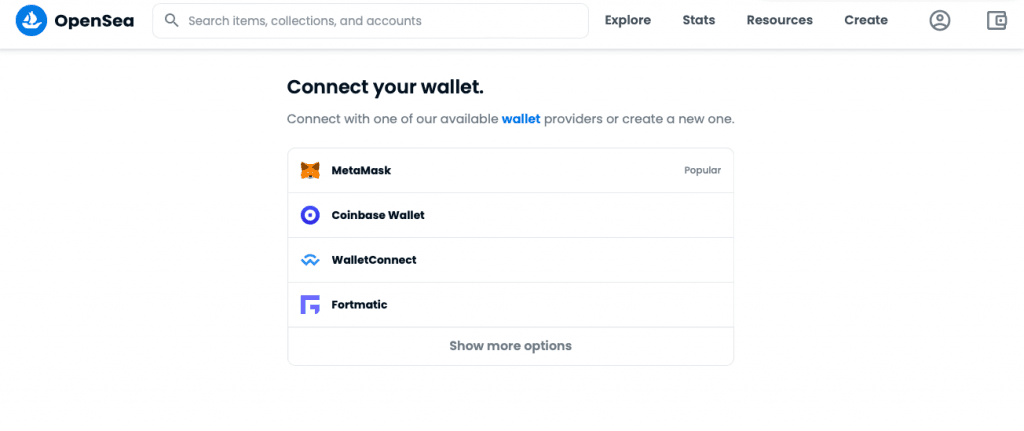
Once you have selected an NFT marketplace, the next step is to create a profile and connect your ETH wallet by following the instructions on both the marketplace and your chosen crypto platform. With a few minor differences, this process is nearly identical across all platforms and various marketplaces.
How to create an NFT
As we have already mentioned, an NFT, or non-fungible token, can be created and attached to almost any digital asset and then listed on the market: from memes to audio files, from mobile phone videos to digital photographs. However, this does not mean that your content will sell, as many marketplaces are full of NFTs that will not generate any money.
Nevertheless, NFTs can dramatically increase the value of virtual property and act as a certificate of authenticity in the antiques and collectibles market. Of course, an NFT can be freely shared, traded, and gifted, but it is guaranteed that this digital property is, regardless of everything, unique: the real thing.
If we cannot avoid it, here is a basic overview of how to create your own NFT, once you have invested in some cryptocurrency, settled on an NFT marketplace, and connected your crypto wallet.
Create a collection.
On almost all NFT marketplaces, the first step in the NFT creation process is setting up a collection, usually found in the “create” dropdown menu. From there, you will follow the instructions and provide the required information.
Click on: “new item”. The next step is to upload your artwork, first by selecting “new item” from the create dropdown menu and following the prompts again.
Create. And with that, you have created your NFT!
But as anyone who has ever tried to bring a product or service to market knows: just because you have created an NFT does not mean it will sell. There are many factors that influence whether your product will earn money or not, starting with marketing. In the next section, we will cover tips for marketing your collection.
Let’s not forget SECURITY! It is extremely important for all creators to use Ledger in the initial phase. Later, using MetaMask is no longer secure. All Ledger products combine a Secure Element and a proprietary operating system designed specifically to protect users’ cryptocurrency assets. These wallets also use a 24-word recovery backup phrase, which can be used to access the user’s cryptocurrency if the device containing the private key is stolen. Investors can store more than 1,100 cryptocurrencies and tokens on the Ledger Nano S, with 23 cryptocurrencies supported directly by Ledger and the rest supported through installed third-party applications.
How to Buy an NFT on the OpenSea Marketplace
Here is a step-by-step process for buying an NFT on the OpenSea NFT marketplace.
All you need is a digital wallet with sufficient funds to get started. MetaMask is the most popular web wallet for NFTs. We have already covered this part.
If you do not have a wallet installed, go to MetaMask and install it as a browser extension, then connect it to the OpenSea platform.
Among the many options available, you will need to find an NFT on OpenSea. One of the most well-known collections available is the Bored Ape Yacht Club, with the cheapest Bored Apes now selling for approximately $295,000.
Searching for NFTs can be a fun, exploratory process, but also an overwhelming task that can wear you out. However, thanks to OpenSea’s filter feature, searching has become easier than ever. You can filter and search for art, collectibles, domain names, music, photography, sports, trading cards, utilities, and virtual worlds.
You can also view details about NFTs, such as their name, their corresponding collection, subtotal, and total.
This can help you choose NFTs that have caught your interest. Have you found one yet?
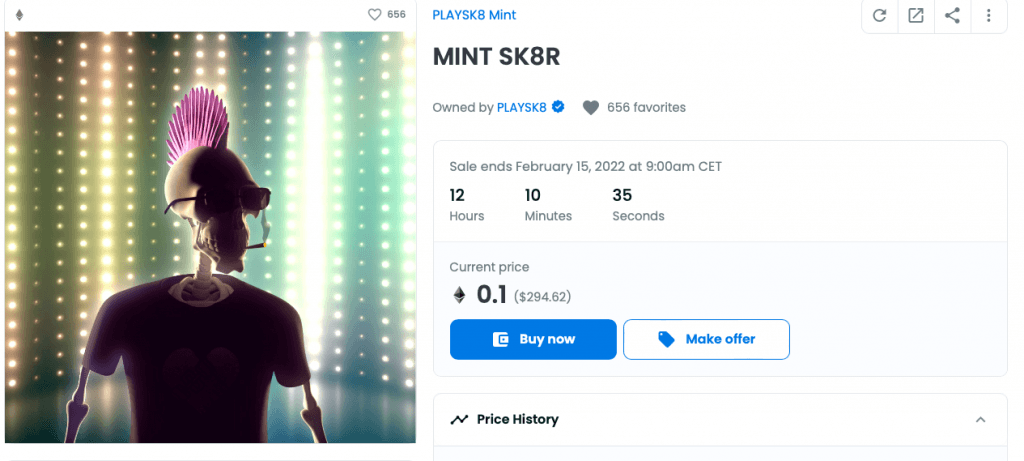
You have found your NFT and all that remains is paying for it. You can buy it directly or make an offer, depending on the sales process the owner is using.
Some NFTs will include a “Make an Offer” option, where you can “Place a Bid”. You may want to see the number of bids already made to get an idea of its demand and how much you may need to offer. On OpenSea, your offer must be at least 5% higher than the previous one.
When you are fighting for an NFT you love (it’s worth fighting for love 🙂 ) and you successfully win the bid, you need to turn to your MetaMask wallet for payment.
You will also need to pay a certain amount in “gas” fees. The best time to buy using MetaMask is when the Ethereum network is less congested, as you will pay lower “gas” fees. You can view and monitor current fees through the Ethereum Gas Tracker.
Within just a few seconds, your brand new NFT will appear in your collection. And that’s how easy it is to buy an NFT!
How to market an NFT?
There are a few different ways to attract eyes to your NFT collection, some are free and others are paid. Here are some suggestions:
- List it in an NFT calendar.
An NFT calendar is perhaps the best and only way to list your NFT across all the different NFT marketplaces in one interface. It is easy to use and allows for simple navigation. The following information is required to use an NFT calendar:
- The title of your NFT collection or artwork and a detailed description.
- Information about the NFT creator.
- Images, date and time associated with your NFT drop.
- The marketplace where your NFT will be listed and a link to the NFT.
- Social media and Reddit.
Building and using social media channels or even creating threads on Reddit or Bitcointalk are two additional ways to market your NFT. Keep in mind that NFTs are still a relatively new concept, so you may need to spend some time educating your followers about how NFTs work and about your specific collection.
- Word of mouth.
Sometimes the best way to market NFTs is the most old-fashioned way of marketing any product: word of mouth, by asking your friends, family or colleagues to join in and share your NFT on their own social media channels or within their social circles.
Depending on the marketplace you choose to host your NFT on, there is a good chance they have a featured page on their website or perhaps even their own newsletter in which your NFT could be published. The process of getting your NFT published in a newsletter or on an NFT page varies and most often there is no guarantee that you will succeed.
In addition, there are some effective paid ways to market your NFT, including paying an influencer to mention your NFT or hiring a marketing agency.
Is it safe to buy an NFT?
It is important to understand that the value of an NFT will be based on how much someone is willing to pay for it. Demand will drive prices up. If you understand the concept of NFTs, you should consider purchasing them after appropriate research, as would be expected with any other, especially larger, investment.