
When people hear the word cryptocurrency, Bitcoin is often the first word that comes to mind. This may not be so surprising, as Bitcoin was the catalyst for the entire cryptocurrency spectacle. We can observe that nowadays many people, due to the ever-growing recognition of this original crypto asset, are consequently also asking: “What is Bitcoin?” The vast majority have had the answer to this question explained in an overly complicated way, or people browsing the internet have encountered incorrect information or myths about this cryptocurrency in the flood of information. So if you were looking for a guide to key facts about the Bitcoin cryptocurrency based on facts, then you are in the right place!
In the article, we will provide you with key information in a simple and understandable way. In it, you will find answers to the questions you want to know to understand this cryptocurrency, and you will also gain a clear insight into the history of cryptocurrencies and blockchain technology.
Bitcoin – the cryptocurrency that started it all
Let us go back to 2008, when governments were bailing out banks during the global financial crisis for making loans they could not afford. At the time, governments themselves were in deficit, so their only solution was to print larger quantities of money. An anonymous cryptographer and programmer (or group of cryptographers or programmers) understood the consequences of the economic decisions that were being made. Thus, on October 31, 2008, the white paper on the first P2P (“peer-to-peer”) electronic cash payment system was published. A few months later, on January 3, 2009, the developer or group of developers under the pseudonym “Satoshi Nakamoto” launched the world’s first blockchain – Bitcoin. At that point, the network began operating and a new system of decentralized digital currency without a central authority (such as a bank or other intermediary) was introduced. As a tribute to the economic environment of the time, the first transaction included a message referencing a newspaper headline: “The Times, Jan 3, 2009: Chancellor on brink of second bailout for banks.” The message referred to the British newspaper reporting on the continued printing of money.

Traditional financial infrastructures operate with a small team that manages decisions affecting millions. In addition, the legacy institution technically owns users’ assets. Typically, large corporations retain the majority of profits and give their customers a small share. Business in the financial industry is repeatedly obscured, misleading, and hidden from the public. In this article, we will explain how this innovative technology is here with the purpose of changing all of that.
Who created Bitcoin
The identity of the original developer of the Bitcoin blockchain remains unknown to this day. The only thing we know for certain is the pseudonym “Satoshi Nakamoto“, and it remains a mystery whether this refers to an individual or a group of developers.
Several prominent cryptographers have been named as potential founders – Hal Finney, Nick Szabo, Wei Dai, and Adam Back – but all have denied it. Satoshi continued to collaborate with other Bitcoin developers until mid-2010, before handing over control of the source code repository. Satoshi is also the author of archives of emails and forum posts about the future of Bitcoin, before completely leaving the project in 2011. Bitcoin is now contributed to by hundreds of developers in addition to a community of millions of users.
How Bitcoin works
Bitcoin is a P2P (“peer-to-peer”) electronic payment system that allows customers to conduct transactions with each other without having to use any trusted third party or intermediary. It is an alternative to our traditional financial system, where payments must be made through financial institutions.
Bitcoin therefore operates using a so-called “peer-to-peer” technology known as blockchain. Blockchains are databases. Instead of records being stored on a central server accessible to all users, records in blockchain technologies are stored on users’ computers around the world. This is why we say that blockchain is a distributed database with a “peer-to-peer” architecture. “Distributed” means that data is stored in multiple locations, while “peer-to-peer” means there is no central authority holding the master copy of the data. This technology uses a cryptographic function to ensure that transaction information cannot be forged or altered by anyone. This involves participants from around the world collectively using computing power to confirm, verify, and process payments from across the globe. The latter allows people to pay directly from A to B without needing third parties as intermediaries, such as banks. Furthermore, the transaction verification process is carried out using mathematics, computer science, and cryptography. As the motto goes: “Don’t trust, verify!”
For a better understanding of how blockchain technology works, let us continue with a more grounded explanation. Records are kept in blocks. When a transaction is executed, another block is formed, and so on. This is also why the technology is called “blockchain“, or in other words, “block chaining technology“. A new block is formed when the majority of the network confirms the transaction. A new block contains a cryptographic signature from the previous block, and this signature is known as a “hash“, or in other words, a “hash function“. In blockchain technology, the hash value of each block is based on the hash value of the previous one, which is also based on the hash value of the block before it, and so on, all the way back to Nakamoto’s block 0. As a result, new blocks of data can be added to the blockchain, but it is impossible to modify or delete previous blocks. This means you cannot send a certain amount of euros in Bitcoin and then delete the transaction. Every new transaction on the blockchain is confirmed using the hash mechanism. Additionally, Nakamoto used encryption to ensure that data stored on the blockchain can be seen by any user, but can only be decrypted by those who have the appropriate decryption key. Without the key, you only see a stream of meaningless characters.

When using Bitcoin, you do not need to trust a centralized entity, such as a government, bank, or financial institution. Let us illustrate this with a concrete example: using the PayPal payment system requires you to trust the system’s ability to carry out transactions. Similarly, paying with a Mastercard requires you to trust Mastercard, your bank, your merchant’s bank, and other payment companies to execute your transaction. Have you started wondering at this point where this is leading?
Bitcoin differs from traditional fiat currencies (i.e., money issued by a country’s government) in that it is not backed by any government, central bank, or centralized authority. Instead, it is created, stored, and digitally distributed in a public, decentralized ledger that follows a strict set of simple rules.
The ability to manage a financial system in a decentralized manner without the obligation of trusting a centralized intermediary is the philosophy that created Bitcoin.
What is Bitcoin mining?
One of the prerequisites an asset must have to be useful as a monetary or currency value is proof-of-work. Before Bitcoin appeared, the term mining would have conjured images of massive tractors, dusty trails, and enormous piles of rock. With the arrival of Bitcoin, however, the term mining took on an entirely new meaning. It refers to the act of solving a complex, repetitive computational-mathematical problem that can only be efficiently solved by specialized computers.
To explain what cryptocurrency is, we must therefore talk about the mining process. Since the system is completely decentralized, no one can control it. This also means that no one can assign someone the task of becoming a miner. At the same time, it also means that no one can prevent anyone from becoming a miner. For this system to actually work, there must be a system that prevents anyone from being able to abuse it. To solve this problem, Nakamoto used the so-called SHA-256 algorithm for mining. This means that miners can confirm their work, which is known as “proof-of-work.”
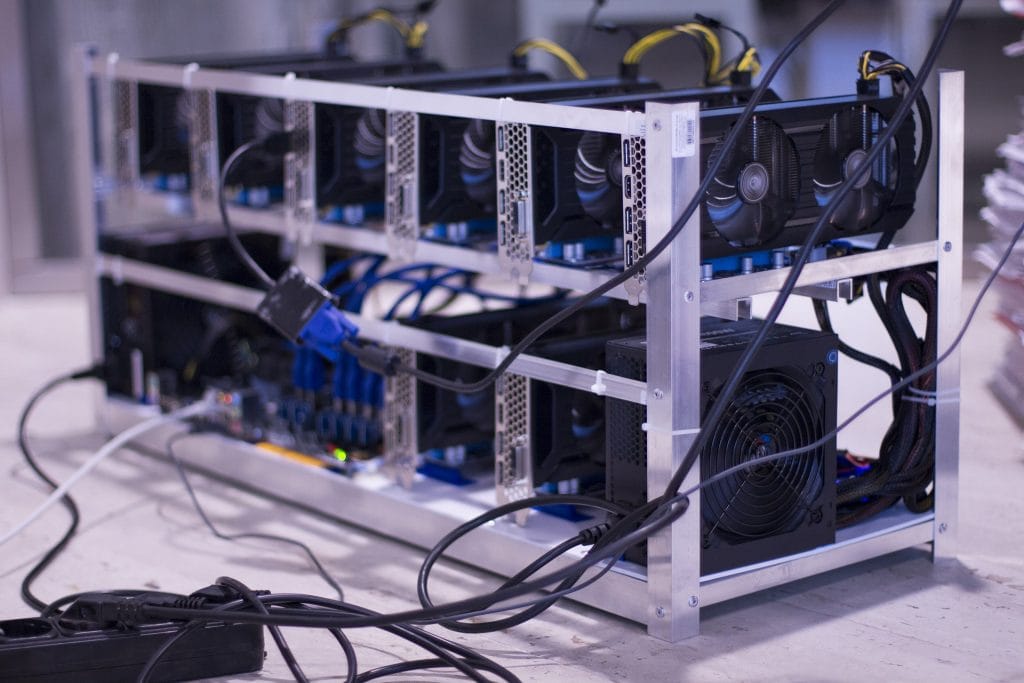
The main reason miners are interested in participating in Bitcoin mining is that they are interested in earning a Bitcoin block reward, which is awarded to the producer of the next block. Miners maintain the security of the Bitcoin network. They invest electrical energy into the computational power of solving complex mathematical problems and are rewarded in the form of block rewards. The block reward that miners receive is essentially the fee that the Bitcoin network pays for network security. Such a method ensures that the Bitcoin blockchain cannot be easily tampered with. In the case of Bitcoin, each block is produced approximately every 10 minutes. During this 10-minute period, miners select transactions to be verified, giving priority to those with the highest fees. When a new block is created, the included transactions are added to the blockchain and broadcast to participants around the world.
The time when Bitcoins could be mined on a personal computer is long gone, as miners need specialized computing units and mining software that provides the necessary level of computing power to remain competitive and profitable.
What is Bitcoin backed by
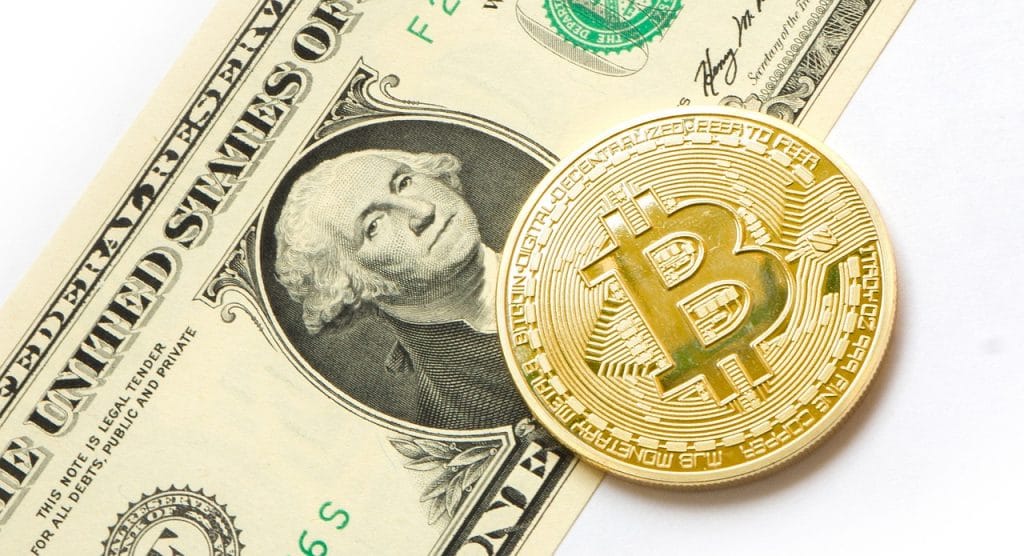
Until 1971, traditional fiat currency in paper form was representative of the amount of gold that could technically be redeemed at a bank. However, US President Richard Nixon removed the gold backing of the US dollar in the early 1970s. Since then, most fiat currencies have not been backed by anything other than government trust. Bitcoin, on the other hand, is itself a revolutionary asset with deflationary aspects, with its value determined by the supply and demand of the holder community. Bitcoin has no backing from any underlying asset. With cryptocurrency, users are like their own bank, responsible for the security and location of their funds. This means that if you are a Bitcoin holder and lose the private keys to your crypto wallets, you permanently lose your assets.
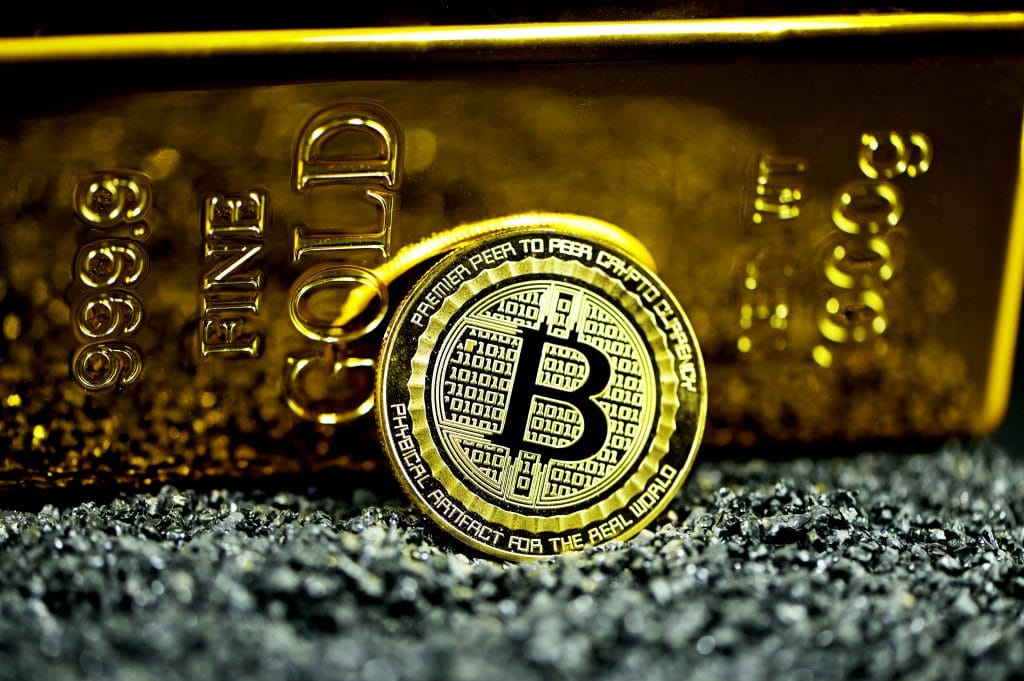
The supply and demand for an asset is arguably the most fundamental basis for valuing anything. When governments increase the supply of the national currency by printing more money, and when demand remains the same (among the country’s population), this devalues that currency. As such, the value of the currency itself decreases, meaning it requires more to pay for everyday things. The latter is called inflation. This is why people protect themselves against inflation by investing in deflationary assets such as real estate or physical gold. Similarly, the introduction of Bitcoin offers the world a new way to protect against inflation. Blockchain technology offers complete transparency, immutability, and security for anyone to make payments and store their wealth. The native coin of the Bitcoin blockchain is known as BTC (= Bitcoin). It is important to know that only 21 million Bitcoins can ever exist, as the maximum supply is cryptographically encoded in the chain. Since its introduction, Bitcoin has outperformed every single asset class in terms of value appreciation. In addition, people can store it in various cryptographic wallets.
This fixed monetary policy and predictable inflation schedule are also in complete contrast to central banks around the world and their history of intervention.
What is Bitcoin halving
Cryptocurrencies like Bitcoin will reach a maximum limit in the future. Experts have calculated that the creation of new Bitcoins will end in 120 years. This is a result of the finite total number of Bitcoins. This is also what distinguishes them from ordinary fiat currencies, which can be created by a government or bank as needed.
Bitcoin halving is a process by which mining block rewards are gradually reduced. This means that the new daily supply of Bitcoins added to the network each day is cut in half. The next halving is expected to take place in early 2024. When the amount of new Bitcoins shrinks following a Bitcoin halving event, the price traditionally rises. When the 32nd halving is completed in 2140, the reward will drop from 0.00000001 BTC to zero. The value of zero will be reached because the currency is programmed to have a maximum of 8 decimal places. At that point, no new Bitcoins will be created, and the total supply of 21 million BTC will have been reached. Bitcoin miners will then rely solely on network transaction fees to compensate for their computing power. It is anticipated that the value will continue to grow during this time, and as a result, the average person will find it difficult to afford to buy 1 Bitcoin, making it more realistic that purchases will be made in fractions of Bitcoin. The smallest value one can own is therefore 0.00000001 BTC, which is also known as 1 Satoshi.
Where to Buy and Safely Store Bitcoin
If you are new to cryptocurrencies, the easiest way to buy Bitcoin is on a centralized exchange such as Coinbase or Binance. By number of users and trading volume, these are the two largest crypto exchanges in the world. Coinbase offers a service for those who want to buy Bitcoin and other major established cryptocurrencies and hold them for a longer period of time. Binance, on the other hand, is an excellent platform for beginners who want to buy Bitcoin along with other small-cap coins and start trading their crypto assets.
If you are buying Bitcoin on Coinbase, Binance, or any other exchange (e.g. ByBit, Bitstamp, FTX, KuCoin, OKX, SwissBorg, etc.), it is not advisable to keep large amounts of cryptocurrency in a wallet connected to the internet (“hot wallets”). Although many security protocols exist, “hot wallets” are still vulnerable to online attacks.

The type of Bitcoin wallet you choose will likely depend on what you want to use it for and how much you need to store. The most secure way to store cryptocurrencies is a “cold wallet” (also known as a “hardware wallet”). Using these wallets requires a bit more learning and they represent a more expensive option. As such, they may be more suitable for storing larger amounts of Bitcoin for more experienced users. Only purchase them directly from the manufacturer, and it is advisable to use reputable brands such as Ledger or Trezor.
Does Bitcoin Have a Future
Bitcoin is an asset that offers true decentralization within a free market. Because of this, its value could theoretically drop to zero tomorrow. This could happen if everyone who owns Bitcoin decided it was worthless and sold it. The reality, however, is quite the opposite. The number of individuals, governments, and companies discovering Bitcoin’s value propositions is constantly growing.
While the return on investment has been significant for many investors, Bitcoin itself was not designed for a technologically savvy Western society to generate profit. Instead, Bitcoin offers a safe haven for the two-thirds of the world that does not have access to banking. Yet more than half of these people do have access to a smartphone. This means that anyone with access to an internet connection can invest in and store Bitcoin using a crypto exchange. For residents living in failing economies and dictatorships, Bitcoin represents an online space for protection against hyperinflation and the devaluation of local currencies.
Don’t Miss!
You will find that Bitcoin is explained in many different media, with the definition of Bitcoin varying depending on how people understand it. We hope that our article “What is Bitcoin” has offered you a clearer insight into the history of cryptocurrencies and blockchain technology. If the content of the article has spoken to you and you would like to find out more, we kindly invite you to join a free webinar on how to earn with cryptocurrencies!
We are not financial advisors. All information regarding cryptocurrencies is accepted at your own risk. Do your own research as well.
You can register by clicking on the following link: https://zannekrep.com/brezplacno20/.
Free webinar: How to Earn with Cryptocurrencies