
When I started researching selling on Amazon, one question confused me the most: should I ship products myself or should Amazon do it for me? That’s exactly the difference between Amazon FBA and Amazon FBM. In this article, I’ll explain to you simply and practically what these two abbreviations mean, how much each option costs, and how to decide which one is right for you. This way, you’ll be able to start making money on Amazon without unnecessary mistakes.
If you’d like me to show you everything live, I invite you to a free webinar, where I explain step by step how to get started.
Quick answer for those in a hurry:
Amazon FBA means Amazon warehouses, packs, and ships your products. Amazon FBM means you do all of it yourself. FBA is better for small, lightweight products that sell quickly since they get the Prime badge. FBM is better for large, heavy, or slow-selling products.
What is Amazon FBA?
FBA stands for Fulfillment by Amazon. The term fulfillment means everything that happens after a purchase: picking the product from the shelf, packing, shipping to the customer, and handling any returns.
With Amazon FBA, you pre-ship your products to Amazon’s warehouse. Amazon calls these warehouses fulfillment centers. When a customer orders your product, Amazon takes care of everything else. Meanwhile, you can sleep, work, or be on vacation.
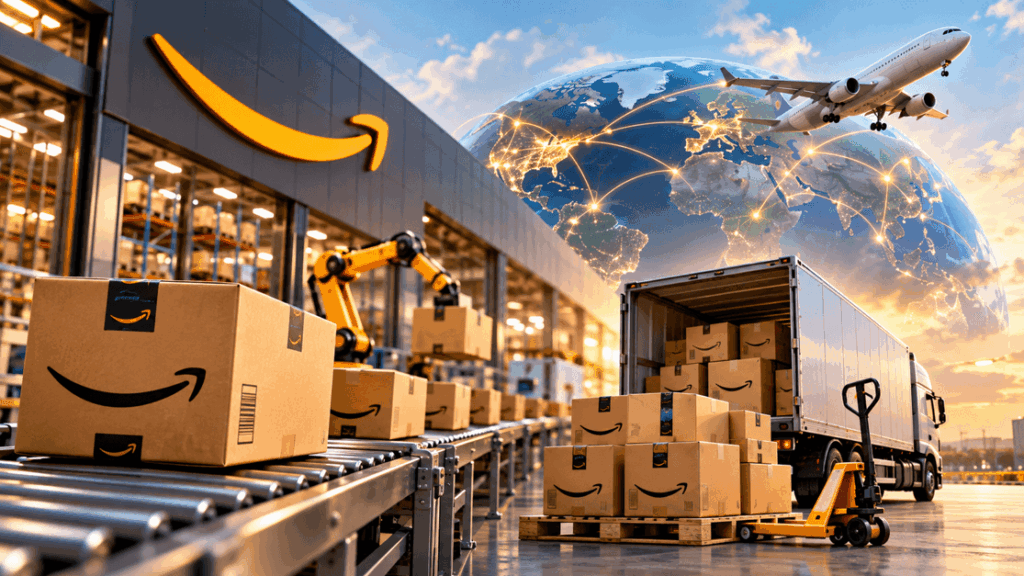
How Amazon FBA works in practice – step by step
- Create an account in Seller Central. This is Amazon’s dashboard for sellers, where you manage products, inventory, and orders.
- Add a product (listing). A listing is a product page on Amazon with a title, images, description, and price.
- Label your products. Each unit gets an FNSKU label. FNSKU is Amazon’s internal code that tells the warehouse the product is yours.
- Ship inventory to Amazon’s warehouse. You do this through a shipment you create in Seller Central.
- Amazon sells and ships. When a customer orders, Amazon packs and delivers the product, often the next day.
- You receive payment. Amazon deducts its fees, and transfers the rest to your account.
The biggest advantage is that your products automatically get the Prime badge with FBA. Prime is Amazon’s program for fast and free shipping for subscribers. Customers with Prime subscriptions often filter their search to only Prime products, so this badge is a huge advantage for selling.
What is Amazon FBM?
FBM stands for Fulfillment by Merchant, which means order fulfillment by the seller. In this case, that seller is you. You may also encounter the term MFN (Merchant Fulfilled Network), which means the same thing.
With Amazon FBM, you store products at home, in your garage, warehouse, or with an external logistics company. When an order comes in, you pack the product yourself and ship it to the customer via mail or a delivery service. You also answer customer questions and handle returns yourself.
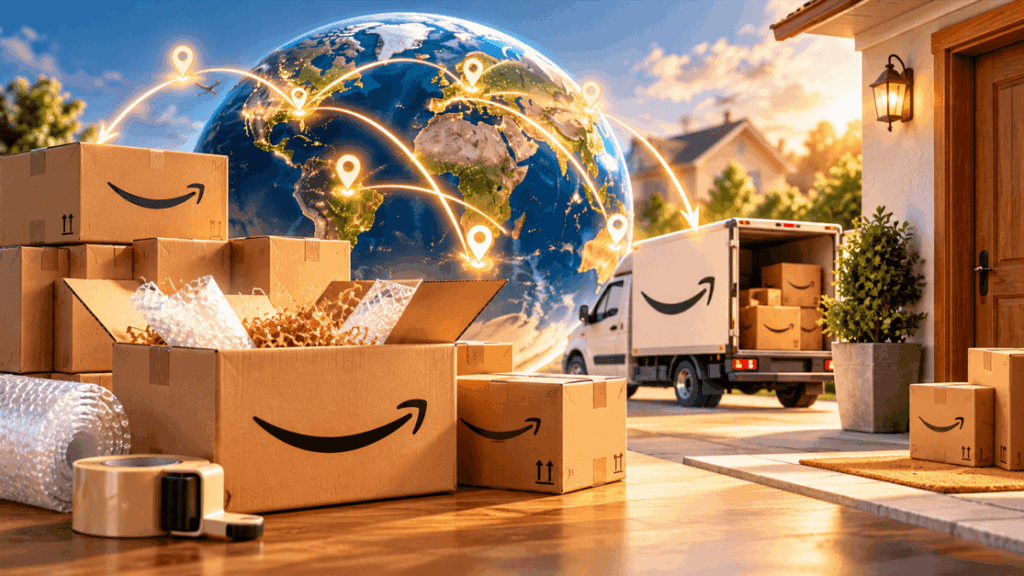
How Amazon FBM works in practice – step by step
- Create an account in Seller Central (same as FBA).
- Add a product and select that you ship it yourself as the delivery method.
- Set shipping templates. These are rules where you specify how much shipping costs and how many days it takes.
- Receive an order in Seller Central and via email.
- Pack and ship the product within the timeframe you promised.
- Enter the tracking number. A tracking number is a code that lets the customer and Amazon track the shipment.
As you can see, FBM is simpler at first since you don’t have to ship anything abroad. However, it takes more of your time as sales grow.
Amazon FBA vs FBM: main differences at a glance
So you can see the differences at first glance, I’ve compiled them in a table:
| Area | Amazon FBA | Amazon FBM |
| Who stores inventory | Amazon | You or an external partner |
| Who packs and ships | Amazon | You |
| Prime badge | Yes, automatically | No (except with SFP program) |
| Customer support and returns | Amazon | You |
| Costs | Shipping and storage fees | Postage, packaging, your time |
| Initial investment | Higher (inventory must be in warehouse) | Lower |
| Your time | Little | A lot, when orders increase |
| Custom packaging and branding | Limited | Full |
| Suitable for | Small, lightweight, fast-selling products | Large, heavy, slow-selling, or handmade products |
With both options, Amazon charges you a referral fee. Amazon charges this fee on every sale, regardless of which delivery method you choose. The difference is therefore only in shipping and storage costs.
Pros and cons of Amazon FBA
Advantages of FBA
- Prime badge. Products with the Prime badge typically sell much better because customers trust fast delivery.
- More Buy Box opportunities. Buy Box is the yellow “Add to Cart” button on the product page. When multiple sellers sell the same product, Amazon assigns this button to one of them. Sellers with FBA often get it more easily.
- Time savings. You don’t pack, go to the post office, or answer questions about delivery.
- Easier growth. Whether you sell 5 or 500 units a day, your work barely changes.
Disadvantages of FBA
- Fees. You pay a fee for each unit shipped and for storage.
- Long-term storage is expensive. If a product sits on the shelf for a long time, costs accumulate.
- Strict rules. Amazon precisely specifies how a product must be packaged and labeled.
- Less control. Your product arrives in Amazon’s box, so it’s harder to build your own brand when the customer opens the package.
Pros and cons of Amazon FBM
Advantages of FBM
- Low initial investment. You can start with a few units you already have at home.
- No Amazon storage fees. This is a huge advantage for products that sell slowly.
- Complete control. You choose the packaging, add thank you cards or gifts.
- Suitable for large and heavy products, where FBA fees would be too high.
- Fast market testing. You can test a new product before ordering larger quantities.
Disadvantages of FBM
- No Prime badge (unless you qualify for SFP, which I discuss below).
- More work. Packing, shipping, and customer communication are your responsibility.
- Strict performance metrics. Amazon monitors whether you ship on time and whether you enter tracking numbers. If your valid tracking number rate falls below 95%, you risk losing the Buy Box, product hiding, and account warnings.
- Slower international delivery. If you ship from Slovenia to a customer in Germany, the package will take longer than shipping from Amazon’s warehouse.
Interestingly, FBM is far from just a choice for beginners. As many as 34% of sellers on Amazon use FBM, either exclusively or in combination with FBA.
I explain more at a free webinar, where you can also ask your questions.
What is Seller Fulfilled Prime (SFP)?
There’s also a third option that combines the advantages of both. Seller Fulfilled Prime (SFP) means »Prime fulfilled by the seller«. You ship the products yourself (like with FBM), but they receive the Prime badge (like with FBA).
It sounds great, but there’s a catch: you must deliver exceptionally fast and reliably. Amazon requires that you pre-qualify before entering SFP, where it checks account health, number of orders, and ability to meet delivery standards. After approval, there’s a 30-day trial period.
For a complete beginner, SFP isn’t the first step. But it’s a good option for later, when you already have established logistics or a reliable logistics partner.
When do I choose FBA and when FBM? A simple checklist
Now for the most important part. Below is a checklist:
Choose Amazon FBA if:
- your product is small and light (for example, the size of a shoebox or smaller),
- you expect regular and fast sales,
- you want the Prime badge without extra effort,
- you don’t have time or space for packing,
- you want to sell in multiple countries at once,
- you’re building a long-term business with your own brand (private label – a product manufactured by a producer that you sell under your own name).
Choose Amazon FBM if:
- the product is large, heavy, or fragile,
- the product sells slowly or seasonally,
- you sell handmade or personalized products,
- you already have an online store and inventory at home,
- your margin (the difference between selling and purchase price) is too small for FBA fees.
Hybrid model: the best of both worlds
Many sellers don’t choose just one option. Many brands use both: FBA for bestselling products and FBM for everything else.
In practice, it looks like this. You first sell a new product through FBM and observe whether it sells. When you see that there’s demand, you send a larger quantity to Amazon’s warehouse and switch to FBA. Additionally, you can use FBM as a backup: if you run out of stock with FBA, you can still sell the product from your own inventory and won’t lose your search ranking.
In my experience, this is the safest way for beginners. The risk is small, and at the same time you have a clear path to growth.
How to start selling on Amazon from Slovenia
Amazon doesn’t have a Slovenian version, so Slovenian sellers most often start on Amazon.com (USA), which is the largest Amazon. From there, you can later expand your sales to other markets.
Steps to get started
- Choose a product. Look for products that are small, light, not fragile, and have stable demand.
- Open a seller account on Amazon Seller Central. Prepare a personal document, bank account, and credit card.
- Choose a seller plan. The individual plan charges you per item sold, while the professional plan has a monthly subscription. For more serious selling, the professional plan is usually better.
- Create a listing. Use quality images, a clear title, and keywords that customers search for.
- Choose a shipping method: FBM for testing or FBA for growth.
- Monitor the numbers. Check sales, profit per unit, and customer reviews.
When choosing a product and writing your listing, you can use tools like Helium 10 and Jungle Scout, which I’ve already written about on the blog. I also recommend my free e-book about earning on Amazon, where the basics are all compiled in one place.
If you want me to guide you through these steps personally, sign up for my free webinar.
Frequently asked questions about Amazon FBA and FBM
What’s better for beginners, FBA or FBM?
Once a product proves it sells, FBA is usually the better choice for growth, as it brings the Prime badge and saves you time.
Can I use FBA and FBM at the same time?
Yes. You can sell the same product through both methods simultaneously. Many sellers use FBA for bestselling products and FBM for slower or larger items and as a backup when FBA stock runs out.
Do I get the Prime badge with FBM?
Not automatically. You only get the Prime badge for self-fulfillment through the Seller Fulfilled Prime (SFP) program, which requires very fast and reliable delivery and prior Amazon approval.
How much money do I need to start on Amazon?
With FBM, you can start with a few hundred euros for a small inventory, packaging, and seller subscription. With FBA, you need more because you must send inventory to Amazon’s warehouse in advance and pay for shipping.
Can I sell on Amazon from Slovenia?
Yes. Slovenian sellers most often start on Amazon.com. With FBM, you ship packages from Slovenia, and with FBA, you send your inventory to Amazon’s warehouse in the USA.
What does it mean if Amazon takes a commission?
The commission (referral fee) is a percentage of the selling price that Amazon charges with each sale. You pay it with both FBA and FBM.

Conclusion: what to choose to earn on Amazon?
The choice between Amazon FBA and FBM is not a question of what is “better,” but what is better for your product and your situation. To summarize:
- Choose FBA for small, light products that sell quickly, and when you want as little work as possible.
- Choose FBM for large or slow-moving items and when you want a low initial investment.
- A hybrid model is the safest path for most beginners: testing with FBM, growth with FBA.
The most important thing is that you start. Choose one product, calculate profit per unit, and take the first step. Every sale teaches you more than reading ten articles.
If you want me to show you how I choose a product, calculate profit, join me on a free webinar. There you’ll get a clear plan for your first steps to earning on Amazon.