
I know what you’re thinking. “Žan, Bitcoin? That’s for the people who got in years ago. I missed the boat.” I completely understand – I had exactly the same doubts myself. But today, when I share knowledge every day with Slovenians who started from zero and now regularly earn with cryptocurrencies, I can tell you with certainty: you haven’t missed anything. In fact, the right time is right now.
In this article, I’ll explain exactly how to make money with Bitcoin – practically, without theory and without complicated financial jargon. I’ll explain every term I mention right away, so you know what you’re doing and why. So let’s read on together.
What is Bitcoin and why is it an opportunity to earn money?
Before I explain how to make money with Bitcoin, you need to understand what Bitcoin actually is.
Bitcoin is a digital currency (money in digital form) that doesn’t exist physically – it isn’t on paper or in coins. It was created to function as money without banks and without a government. Nobody controls it. Its total supply is capped at exactly 21 million units – which means it can’t be “printed” endlessly, the way central banks do with the euro or the dollar.
Why does this limit matter for your earnings? Because basic economics says: when something is scarce but demand is growing, the price goes up. And that is exactly what has been happening with Bitcoin, and what continues to happen.
Blockchain (a chain of blocks) – this is the technology Bitcoin is built on. Imagine it as a huge digital ledger that records every transaction. This ledger isn’t stored in one place, but on millions of computers around the world at the same time. That’s why nobody can forge or alter it.
Not an expert? Great. I started out the same way. That’s exactly why I prepared a free e-book, where I explain all of this even more simply – download it here

Why is Bitcoin worth it compared to saving in a bank?
Let’s get specific. If you leave your money in the bank, today the bank offers you 1–3% interest per year. Meanwhile, inflation (inflation = money becomes worth less every year because more and more of it gets printed) eats away at your savings faster than the bank adds to them.
Throughout its history, Bitcoin has seen significant growth that has far exceeded traditional bank savings. Of course, that doesn’t mean it’s risk-free – but it makes perfect sense to put at least a portion of your savings into Bitcoin, instead of leaving your money in the bank, where inflation slowly erodes it.
The key rule I always emphasize: never invest money you can’t afford to lose. Start with an amount that won’t cause you stress. Even 20 or 50 euros is enough to get started.
How to make money with Bitcoin: 5 proven strategies
Now let’s get to the point. How do you make money with Bitcoin? There are several ways, and I’ll describe the ones I know myself, have tried, and recommend for beginners.
1. The HODL strategy – Buy and Hold
HODL is a term from the crypto world that means “hold” (from the English word “hold”). It’s the simplest strategy: you buy Bitcoin and simply keep it for a longer period – months or years – and then sell when the price rises.
This is the strategy that requires the least time and knowledge. There’s no need to watch charts every day. No need to be in front of a computer. You just buy, store, and wait.
What this looks like in practice:
- You open an account on an exchange (exchange = an online platform where you buy/sell cryptocurrencies – e.g. Binance, Bybit or Coinex)
- You send money via bank transfer (SEPA transfer – the same as when you send money between banks)
- You buy Bitcoin
- You store your Bitcoin in your wallet (I’ll explain this below)
- You wait for the price to rise
- You sell and take your profit
Practical tip: Set a goal right from the start. For example: “When my investment grows 2x (doubles), I’ll sell half and take the profit.” Stick to this plan regardless of the news and noise you hear.
2. DCA – Gradual investing
DCA (Dollar-Cost Averaging = gradual investing) is the strategy I recommend to every beginner. You don’t need to know anything about charts, technical analysis, or market timing), is the strategy I recommend to every beginner. You don’t need to know anything about charts, technical analysis, or market timing.
It works like this: every month you invest the same amount of money in Bitcoin – regardless of what the price is that day. Sometimes you’ll buy high, sometimes low. On average you’ll pay a moderate price, and you’ll avoid the mistake almost every beginner makes – buying right at the top.
Example: Every month you invest €50. When the price is high, you get less Bitcoin. When it’s low, you get more. Over time, you’ve accumulated a substantial amount.
This method works for long-term earnings and is suitable for those who have a regular income and want to build wealth slowly but reliably.

3. Staking and Passive Income
Staking is one of my favorite ways to earn – especially because it works for you while you sleep.
Staking means that you lend your cryptocurrency to the network in exchange for rewards – similar to putting money into a fixed-term savings account at a bank and earning interest. The difference is that staking yields are often significantly higher than at a bank: between 4% and 12% per year, depending on the cryptocurrency.
Bitcoin itself isn’t designed for staking, but on exchanges such as Binance or Bybit you can earn passive income with various Bitcoin products (e.g., Earn products, where the exchange “lends out” your Bitcoin and pays you interest).
Staking is great for those who don’t want to trade actively but still want their crypto to work for them.
I explain all of this and more in detail in my free e-book – Download it here
4. Copy Trading – Copy Successful Traders
Don’t have the time or knowledge for active trading? Copy trading is the solution.
Some exchanges, such as Bybit, allow your account to automatically copy the moves of experienced, verified traders. When they buy Bitcoin, you buy it too. When they sell, you sell. All automatic – without you having to do anything yourself.
The key thing: choose only copy traders with a long history of positive returns – at least 6 months or more of stable results. Don’t fall for those who made 500% last month – they often just got lucky.
Warning: Copy trading carries risk. If the trader loses, you lose too. Always invest only as much as you can afford to lose.
5. Airdrop – Free Coins
Airdrop is one of those ways of earning that most Slovenians don’t even know about.
New crypto projects want to attract users. To do so, they hand out free tokens (coins) to those who try their product or complete simple tasks. Once the project becomes popular and the coins gain value, you sell them.
This takes time and knowledge of which projects are worthwhile, but it’s a legitimate path to earning for free. A particularly popular strategy is searching for new projects with tools like Dexscreener (a tool for discovering new cryptocurrencies before they become popular).
How to Get Started with Bitcoin: Step by Step (for Complete Beginners)
Let’s move on to the practical part. Here is the exact process for getting started today.
Step 1: Choose an Exchange and Open an Account
An exchange is an online platform or app where you buy Bitcoin with euros. For beginners in Slovenia, I recommend the following:
- Binance – the largest exchange in the world, low fees
- Bybit – excellent for beginners, offers copy trading
- Coinex – easy registration, fast identity verification
- Gate.io – wide selection of coins
How to open an account: visit the website, enter your email and password, and verify your identity with an ID card or passport (this is called KYC – Know Your Customer, an identity verification process required by regulators), and that’s it.
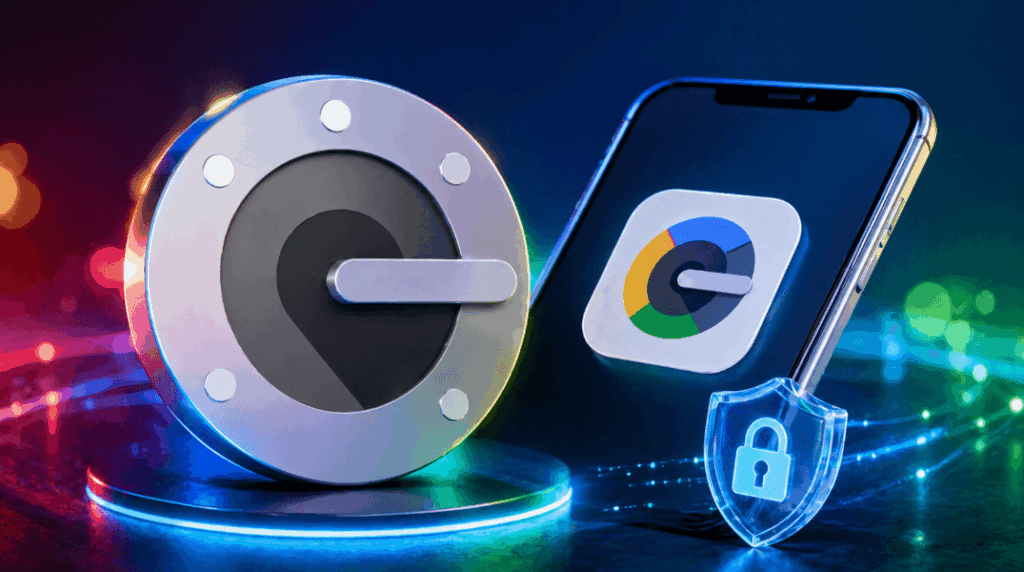
Essential: Once you open your account, turn on 2FA (two-factor authentication). This is a security layer that requires, in addition to your password, a one-time code from the Google Authenticator app on your phone. Without it, your account is vulnerable to hackers.
Step 2: Deposit Money to the Exchange (SEPA Transfer)
Once you have an open, verified account, you send money to the exchange via bank transfer – exactly like sending money to anyone through your mobile banking app.
A SEPA transfer is a bank transfer within the European area. It’s free or very cheap (often €0) and arrives at the exchange within 1–2 business days.
Start with a smaller amount – €50 or €100. Once you get used to the process, you can increase your investment.
Step 3: Buy Bitcoin
Once the money is on the exchange, go to the “Buy/Sell” section and select Bitcoin (ticker: BTC). Enter the amount in euros you want to spend and confirm the purchase.
Spot trading – this is buying real Bitcoin that you truly own. Unlike a CFD (contract for difference – a financial instrument where you only speculate on the direction of the price, without ownership), here you actually get Bitcoin in your possession.
I recommend starting with a spot purchase – no leverage, no risk of losing more than you put in. You simply buy and receive Bitcoin.
Step 4: Store Your Bitcoin Safely
Here comes the most important piece of advice, the one people usually don’t say loudly enough: Bitcoin that stays on an exchange isn’t entirely yours.
Exchanges have been targeted by hackers in the past. That’s why crypto experts say: “Not your keys, not your coins”.
A crypto wallet is a program or physical device that stores your Bitcoin outside of an exchange. There are two types:
- Hot wallet – an app on your phone or computer (e.g., MetaMask). Free, easy to use, and suitable for smaller amounts.
- Cold wallet (cold wallet / hardware wallet) – a physical device (e.g., Ledger or Trezor). It works like a USB key that keeps your Bitcoin offline, separate from the internet. Recommended for larger amounts.
Seed phrase – when you create a wallet, you get 12 or 24 words. This is your “key to the money.” Write them down on paper (NOT on your computer or phone) and store them in a safe place. Whoever has these words has access to your Bitcoin.
Step 5: Sell and Take Your Profit
When you decide to sell, you send your Bitcoin back to the exchange and sell it for euros. You then transfer the euros to your bank account via a SEPA transfer.
Fiat currency – this is the term for “regular” money issued by governments and central banks (euro, dollar, pound). When you sell Bitcoin, you convert it into fiat currency.
Most exchanges (Binance, Bybit..) allow instant transfers to a bank account or card, often with no additional fees.
The Biggest Beginner Mistakes (and How to Avoid Them)
Over all these years, I’ve noticed that beginners keep repeating the same mistakes. Here are the most common ones – and how to avoid them.
Mistake 1: Buying at the Top Because of FOMO
FOMO (Fear Of Missing Out) is a psychological trap that most beginners fall into. They see Bitcoin rising 50% and panic-buy – right when the price is at its peak.
By then, the professionals have already sold. Follow this iron rule: buy when everyone is scared, and sell when everyone is euphoric. Sounds simple? In practice it’s a psychological challenge – but with a system (like DCA) you can avoid it elegantly.
Mistake 2: Putting All Your Money into One Coin
Diversification means spreading your investments across multiple cryptocurrencies. Never put everything into a single coin. Even Bitcoin, despite all its strength, isn’t immune to drops.
Start with Bitcoin as your foundation, add Ethereum (ETH) or Solana (SOL), and slowly get to know the market.
Altcoins – the term for all cryptocurrencies that aren’t Bitcoin. Some are highly risky but potentially very profitable. As a beginner, I recommend sticking with Bitcoin and Ethereum until you gain some experience.
Mistake 3: Falling for Scams
There are a huge number of scams in the crypto world. Here are the red flags that tell you something is wrong:
- Someone promises you a guaranteed return (e.g., “a reliable 1% per day”). That’s a Ponzi scheme (a pyramid scheme in which new investors pay the old ones) – a 100% scam.
- You get a message saying you’ve “won” crypto and only need to pay a “fee” to withdraw it. A classic trap.
- Someone on Instagram or Facebook shows off “earnings” and invites you to invest through an unknown platform.
The rule: No legitimate crypto platform will send you text messages with links where you’re asked to enter your password. Always open the app directly.
Mistake 4: Storing Passwords on Your Computer
Hackers look for files named “passwords.txt” or similar. Write down your exchange passwords and seed phrase on paper and keep it in a safe or another secure physical location – never in digital form.
Which Exchanges I Recommend for Buying Bitcoin in Slovenia
For Slovenians, I recommend exchanges that support SEPA transfers (bank transfers in euros) and have solid security infrastructure:
Binance – the largest exchange in the world. Low fees, a huge selection. Suitable for everyone – from beginners to advanced users.
Bybit – great for those who want to try copy trading or explore advanced features. The interface is intuitive.
Coinex – quick registration, no complicated procedures. Good for those who want to get started right away.
The process is the same on all exchanges: registration → KYC identity verification → SEPA transfer → Bitcoin purchase.

The Psychology of Profiting from Bitcoin: 80% Is in Your Head
I like to say that crypto trading is 80% psychology and only 20% technique. And that’s not just my opinion – every successful crypto investor confirms it.
What does that mean in practice?
When you see red on the chart (price drops), your brain activates its fear center. Most beginners panic and sell at a loss. Professionals are buying at that point.
When you see green and Bitcoin is up 30%, greed and FOMO kick in. You buy at the top. Professionals are selling at that point.
The solution? A system. Set your rules before entering the market:
- What percentage of your portfolio is in Bitcoin?
- At what price will you sell a portion and take profit?
- How much loss are you willing to take before you sell?
Once you have these rules, follow them regardless of the noise from the media, Twitter, or friends. The system is your safety net.
The most successful investors I know open their crypto app once a week. They don’t obsessively watch the charts. They set up a system and follow it.
Bitcoin and Blockchain: Why This Is the Future of Money
For those who want to understand the deeper “why” behind Bitcoin – a short explanation.
Today, central banks (e.g., the European Central Bank) control the euro. They print it as needed. Every euro that gets printed reduces the value of the ones you already have – that’s inflation.
Bitcoin is designed differently. As I mentioned, the total supply is capped at 21 million. This cannot be changed. Nobody can “print” it. That’s exactly what makes it attractive as a store of value – similar to gold, only in digital form.
That’s why big institutional investors (BlackRock, Fidelity, and others) are getting into Bitcoin. When billionaires and funds get in, it means crypto is becoming a legitimate part of the global financial system.
This isn’t speculation. It’s a trend we’re watching unfold today.
How I Follow the Market and Which Sources I Read
The crypto market changes from day to day. To make smart decisions, you need to be informed – but not “buried” in news (which leads to FOMO or panic).
My recommended sources of information:
- CoinMarketCap – this is the “Google” of cryptocurrencies. Here you can see the prices of all cryptocurrencies, market capitalization (market cap = the total value of all coins of a given cryptocurrency in circulation), and daily changes.
- Cointelegraph – global cryptocurrency news
- CoinMarketCal – shows upcoming crypto events (project updates with a known date)
- Whales – the name for investors who hold huge amounts of cryptocurrency. When whales buy or sell, it affects the entire market. There are tools (e.g., Whale Alert) that track such transactions – this is one of the more advanced ways to gauge the direction of the market.
Glossary of Bitcoin and Crypto Terms for Beginners
So that you can speak the “same language” in the crypto world, here’s a short glossary of the most common terms:
Bitcoin (BTC) – the first and best-known cryptocurrency in the world.
Altcoins – all cryptocurrencies other than Bitcoin (Ethereum, Solana, etc.).
Blockchain – block-chaining technology; a decentralized digital ledger of transactions.
Wallet – a program or device for storing cryptocurrencies.
Seed phrase – 12 or 24 words that are your key to your wallet. Guard it extremely carefully!
Exchange – a platform for buying/selling cryptocurrencies
FOMO – fear of missing out; a psychological trap for investors.
HODL – a “buy and hold” strategy.
DCA – investing equal amounts monthly regardless of price.
Staking – passive income by “locking up” cryptocurrencies.
Airdrop – free tokens from new projects.
Market cap – the total value of all coins of a given cryptocurrency.
Fiat currency – ordinary money (euro, dollar) issued by central banks.
KYC – identity verification when registering on an exchange.
2FA – two-factor authentication for account security.
Ponzi scheme – a pyramid scam promising guaranteed returns.
CEX – centralized exchange (e.g., Binance).
DEX – decentralized exchange (e.g., Uniswap).
Gas fee – a fee for processing a transaction on the blockchain.
Copy trading – automatically copying the moves of experienced traders.

Why I Trust Cryptocurrencies and Bitcoin
You might be wondering: “Who is this Žan anyway, and why should I trust him?”
I’m Žan Nekrep, MSc in Business, founder of several companies in Slovenia and abroad, and author of several books. I entered the crypto world out of curiosity and a need to understand how the world of money and finance is changing.
Today is not a day for bragging about earnings. It is a day to tell you: the crypto world is not a casino. It’s financial technology that you either understand or you don’t. And the difference between those who profit and those who lose lies in knowledge and a system.
That’s exactly why I put together a free e-book that takes you from zero to your first earnings. No sales tricks. Just knowledge that works. Download the free cryptocurrency e-book
Conclusion: When Is the Right Time to Start?
The best time to start investing in Bitcoin was years ago. The second best time is today.
Don’t wait for the “right moment.” The crypto market doesn’t wait. Those who learned and started systematically are ahead today.
Here’s your plan for today:
Open an account on one of the recommended exchanges
Deposit a small amount (€50–100) via SEPA transfer
Buy Bitcoin with a spot purchase
Set up 2FA security protection
Download my free e-book for the next steps
That’s it. Five simple steps to your first Bitcoin.
For all of you who want to go a step further and learn advanced strategies, I’ve explained it all in my free e-book. It’s free, in Slovenian, and written precisely for you. Download the free e-book here
The crypto world is here. The opportunity is here. Are you ready?